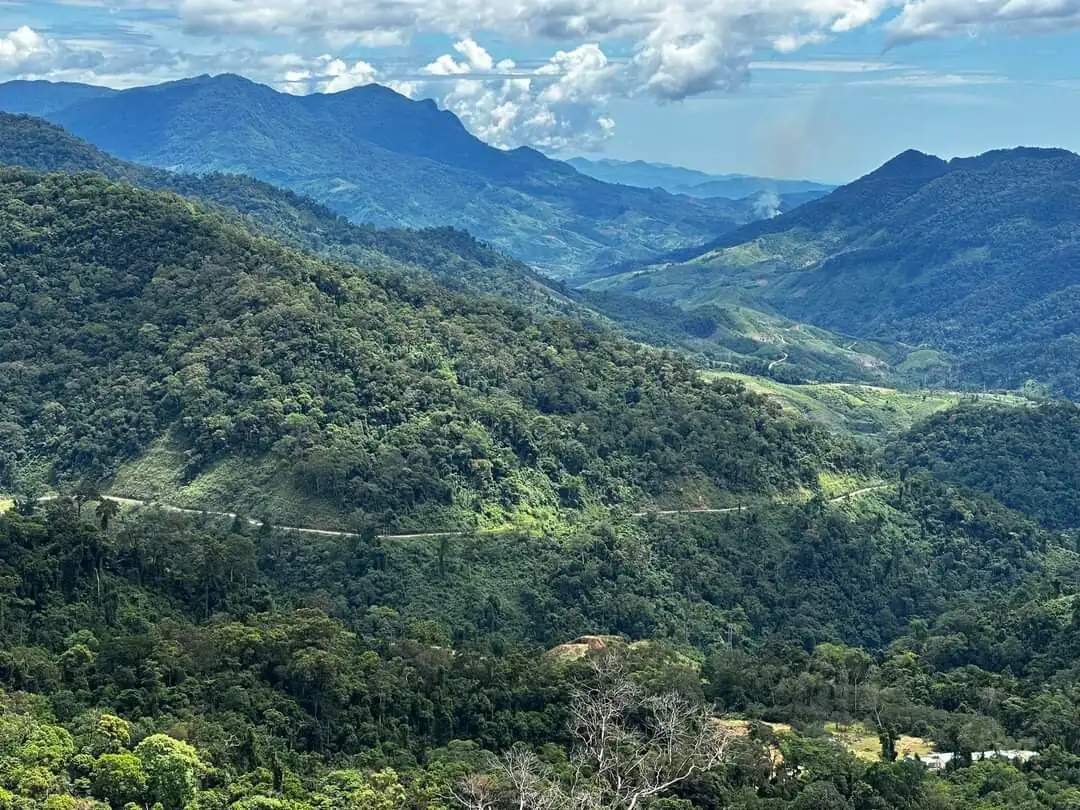
Hang Tam Co: the story of the Eight Ladies Cave
The Hang & Trail team · April 28, 2026
On 14 November 1972, eight young Vietnamese volunteers were sealed inside a cave on Road 20 by a US bomb. The memorial is one of Phong Nha's most affecting stops.
The short version
Hang Tam Co, the Eight Ladies Cave, is a small roadside cave and memorial on Road 20 Quyet Thang, roughly 20km west of Phong Nha town on the western branch of the Ho Chi Minh Trail. On 14 November 1972, eight young road-builders sheltering from a US bombing raid were sealed inside when a huge boulder dropped across the entrance. Rescuers worked for about nine days and could not move the rock. The remains were not recovered until 1996. There's a temple here now, and it's free to visit. Most people stop on a motorbike loop out of town. If you ride the Ho Chi Minh Road for the caves, you pass it anyway, and it's worth pulling over.
One thing to get right before you go: the popular 'eight women' story is not quite the record. The documented eight were four men and four women. The name came earlier, and we'll get to that.
What happened on 14 November 1972
Road 20 Quyet Thang, 'Determined to Win', was a lifeline. It cut west from Phong Nha through the karst toward the Laos border, feeding the supply route south, and the Americans bombed it relentlessly to choke it off. Keeping it open was the job of the Thanh Nien Xung Phong, the Youth Volunteers, who filled craters and cleared landslides by hand, often within hours of a strike.
That afternoon, a squad was working near the km 16 marker, in Tan Trach commune, when the planes came back. The volunteers did what they'd done many times before and ran for a small cave by the road to wait out the raid. This time a bomb brought down a boulder, said to weigh in the thousands of tonnes, square across the mouth of the cave. Eight people were trapped inside, alive.
They could be heard. For days, rescuers outside the rock kept contact, reportedly passing thin rice gruel and water through a length of tube while they tried to break or shift the boulder with the crude tools a frontline road unit had. Nothing worked. The voices grew weaker, and after about nine days they stopped. The eight died inside the cave they'd run to for safety.
- 14 Nov 1972
- the day the cave was sealed
- 8
- volunteers trapped, 4 women and 4 men
- ~9 days
- rescuers worked to shift the boulder
- 1996
- the year the remains were recovered
Who the eight were
All eight came from Hoang Hoa district in Thanh Hoa province, far to the north, and served in the same Youth Volunteer unit. They were young, between 18 and 25. Four were men and four were women.
The men were Nguyen Van Hue, Nguyen Van Phuong, Hoang Van Vu and Nguyen Mau Ky. The women were Tran Thi To, Le Thi Luong, Do Thi Loan and Le Thi Mai. Their names are listed at the memorial, and Vietnamese visitors often read them aloud as they light incense. They weren't soldiers in the usual sense. They were teenagers and twenty-somethings with shovels, sent to keep a road open under one of the heaviest bombing campaigns the war produced.
Why it's called the Eight Ladies Cave
The English name, and the Vietnamese 'Tam Co', translates to something like eight girls or eight young women, which has led a lot of travel write-ups to tell the story as eight women who died here. That's not what the records show. The eight who were trapped were four women and four men.
The name is older than the tragedy. Local accounts say an earlier squad of young women Youth Volunteers worked this stretch and regularly sheltered in the same cave, so people had already taken to calling it Hang Tam Co before November 1972. When the eight died there, the existing name stuck and the two stories blurred together. It's a small thing, but it's the kind of detail worth getting right at a place people come to honor.
The memorial and temple today
What stands at the site now is a quiet memorial complex rather than a tourist attraction. There's a temple beside the road built to the eight and to the wider toll of Road 20, an incense altar, and the cave itself a short way off, which you view from outside. The cave is treated as sacred ground and isn't open to walk into.
On any given day you'll see fresh incense, flowers, fruit, and small offerings left on the altar. Vietnamese travelers, veterans, students and serving soldiers come through, and the place can be busy around the November anniversary and Vietnamese holidays. A wild banana tree grows near the entrance, and there's a local legend that it once bore eight bunches of fruit on the anniversary, each bowed toward the cave. Take that as folklore, which is how locals tell it, but it tells you something about how the place is held in the area.
Hang Tam Co is a recognized national historical relic, and in 2010 the eight were posthumously named Heroes of the People's Armed Forces. None of that is what makes the stop land, though. It's the smallness of the cave against the size of what happened in it.
Where it sits on the Ho Chi Minh Trail
The cave is on the western branch of the Ho Chi Minh Trail, the stretch known as Road 20 Quyet Thang, which runs from near Phong Nha into the national park toward Laos. This wasn't a quiet back road during the war. It was a deliberate shortcut built to move supplies past a bottleneck, and it took some of the most concentrated bombing of the whole campaign. The jungle has grown back over most of the scars now, and the asphalt is smooth and nearly empty.
That's why the memorial doesn't feel like a detour. It sits right on the route most people ride for the caves. From town you pass the Bong Lai valley turn-off, Mooc Spring, and the Botanic Garden, then Hang Tam Co, and a little further on the turn for Paradise Cave. The history and the scenery are the same road.
How to visit
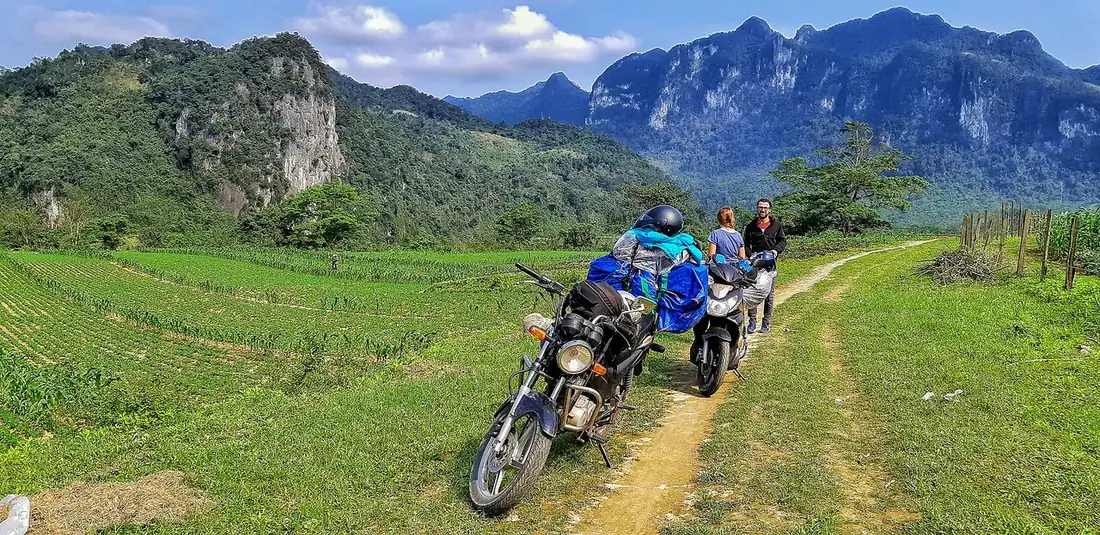
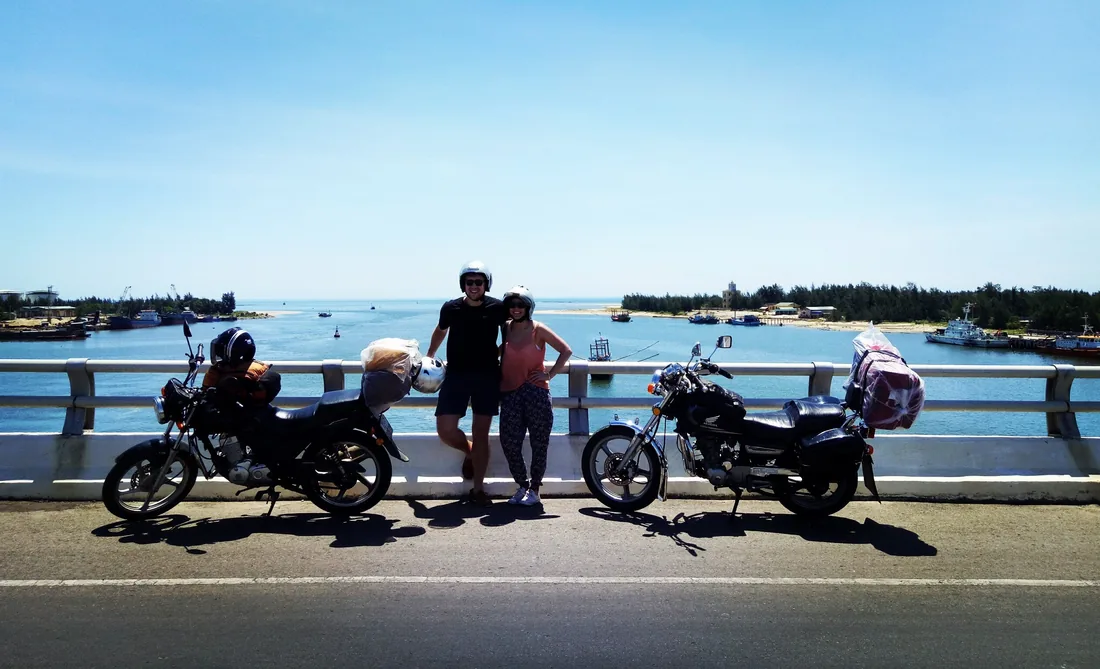
The easy way is on a motorbike. Rent one in town for around $6 (150,000 VND) a day, ride out west on the Ho Chi Minh Road, and the memorial is roughly 20km from Phong Nha, well signed, on the left as you head into the park. It's an automatic stop on the western loop, and you can fold it into a half-day that takes in Mooc Spring, the Botanic Garden and Paradise Cave. Allow 20 to 30 minutes here.
Entry is free. There's no ticket and the altar is usually unattended, so bring a few incense sticks if you want to pay respects, the way locals do. You can buy incense cheaply in town beforehand. If you'd rather not ride, several Phong Nha operators include the stop on Ho Chi Minh Trail and history loops, some with a guide who can fill in the wartime context properly, which is worth it if the history is the reason you're going.
If you're not on a bike at all, any tour that runs the western branch will pass it. You don't need to plan a separate trip out here.

Visiting respectfully
This is a grave and a working shrine, not a photo stop, and it's busiest with people who feel the history personally. A few simple things keep you on the right side of it. Cover your shoulders and knees, especially at the temple. Some shrines here expect a sarong over shorts for anyone, men included, so dress for it before you arrive.
Keep your voice down, don't climb on or into the cave, and don't move or take anything from the altar. If you light incense, three sticks is the usual count, lit together and placed in the burner. Photos are generally fine outside, but read the room, and don't photograph people praying without asking. If a local family is there paying respects, give them space and wait.
You don't need to know the whole war to stand here for a few minutes and take it seriously. Eight people about the age of most travelers who pass through ran into this cave to stay alive, and didn't come out. That's the whole reason the place is here, and a quiet stop is the right way to honor it.
Common questions
Can you actually go inside Hang Tam Co?
No. The cave itself is treated as sacred ground and a grave, so you view it from outside only. The memorial complex you can walk around is the temple, the incense altar and the signed grounds beside Road 20. The eight died sealed inside the cave in 1972, and their remains weren't recovered until 1996, so the cave is left closed and undisturbed.
Were the Eight Ladies really all women?
No, and this is the most common mistake in travel write-ups. The documented eight who died on 14 November 1972 were four women and four men, all Youth Volunteers from Hoang Hoa district in Thanh Hoa, aged 18 to 25. The name Hang Tam Co predates the tragedy: an earlier squad of young women road-builders sheltered in the same cave, so the name was already in use when the eight died and the two stories blurred.
How far is the Eight Ladies Cave from Phong Nha and how do you get there?
It's about 20km west of Phong Nha town on Road 20 Quyet Thang, the western branch of the Ho Chi Minh Trail. The simplest way is a rented motorbike (around 150,000 VND a day) on the western caves loop, and the stop is well signed on the left as you ride into the national park. Entry is free. Any tour that runs the western branch passes it too, so you don't need a separate trip.
Want this turned into a real plan? Plan my trip →