
World's largest cave
Son Doong
Hang Sơn Đoòng
The biggest cave on earth, with its own jungle, river and weather inside. The bucket-list trip everyone has seen on 60 Minutes.
- Price from
- $3,120 (79.500.000 ₫)
- Duration
- 4 days / 3 nights
- Difficulty
- Strenuous
- Season
- January to August
- How to visit
- Guided tour · Oxalis
around $3,000 per person, 4 days. Prices checked June 2026, refreshed quarterly.
Last visited: June 2026
Is it worth it?
Once in a lifetime, but sold out through 2027 and not cheap. If you can't get a spot, the caves below get you 90% of the magic.
How to visit
Son Doong is a guided trip only, run by Oxalis. Book ahead, especially in peak season, and check the latest dates and price before you commit.
Oxalis is the only licensed operator for this cave, so this goes straight to their own booking page.
Sold out until 2028? Here's the smart move.
Son Doong is booked through 2027 and the 2028 spots go fast. If you can't wait or can't justify the price, Hang Pygmy gives you a similar giant-cave overnight for a fraction of the cost, and you can usually book it this season.
The short version
Son Doong is the largest cave on earth. The main passage is big enough to fly a Boeing through, with its own jungle, its own river and its own weather sealed underground. One company, Oxalis, holds the only legal permit, the trip is four days and three nights, and it runs around $3,000 (79,500,000 VND) per person (Prices checked June 2026). Only about 1,000 people are allowed in each year, so 2026 and 2027 are fully booked and 2028 is the year you can still grab. Almost everyone who goes calls it the best thing they have ever done. If you cannot get a spot or cannot spend that much, Hang Pygmy and Kong Collapse get you most of the way there for a tenth of the cost.
- ~9 km
- of cave passage
- 200 m
- ceiling at its highest
- ~1,000
- visitors a year
- Jan-Aug
- the only season it runs
How much Son Doong really costs and what is included
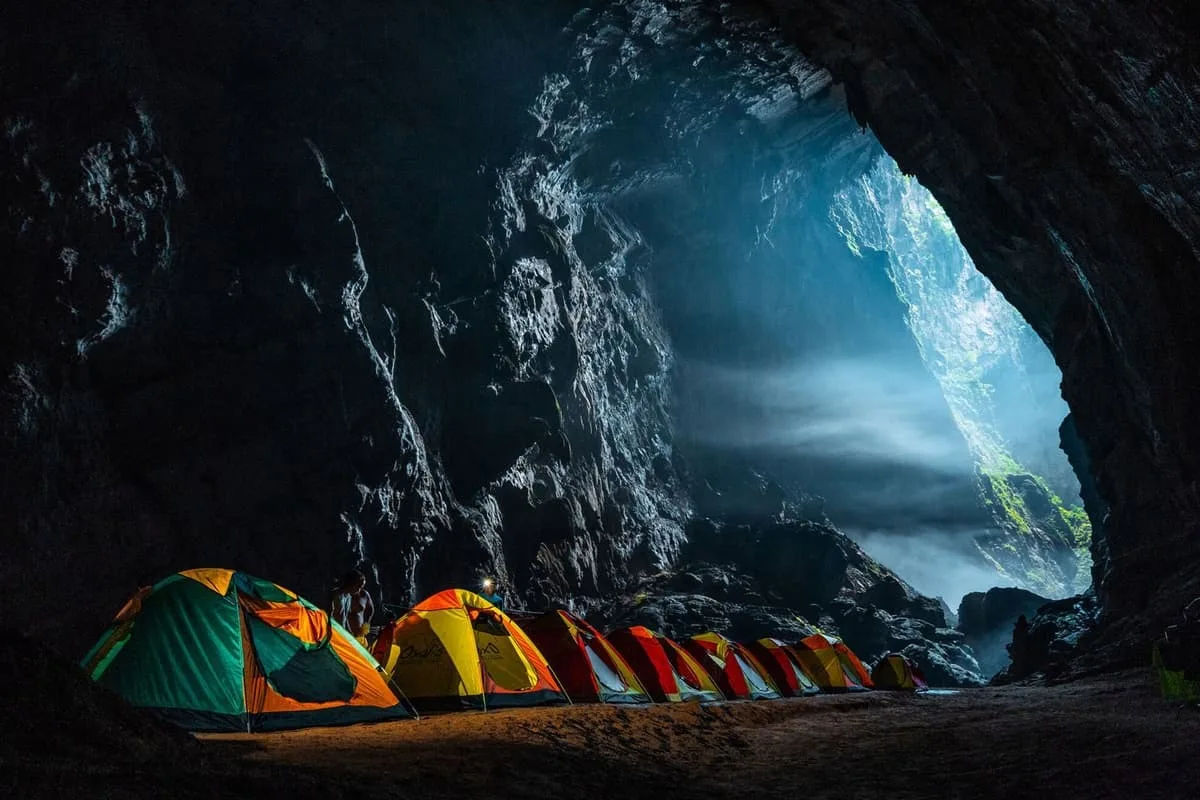
The headline price is about $3,000 (79,500,000 VND) per person (Prices checked June 2026), and it is one of the rare cases where a $3,000 tour is honestly priced rather than gouging you. That fee covers the national park permit, your guides, the safety crew, the porters who haul everything, all your food, the camping and caving gear, plus airport pickup, two hotel nights in Dong Hoi and the meals on either side of the trek.
The reason it costs what it does is the staffing. Oxalis caps each group at 10 guests and sends roughly 30 people in to support them: international safety advisors, Vietnamese guides, cooks, and a long line of local porters. Much of that money stays in Phong Nha villages, where the men who used to log this forest now carry packs and rig ropes instead. Budget past the sticker price too. Add travel insurance that covers trekking, tips for the team, and any kit you need to buy, and most people land closer to $3,300 to $3,800 all in.
What the four days are actually like
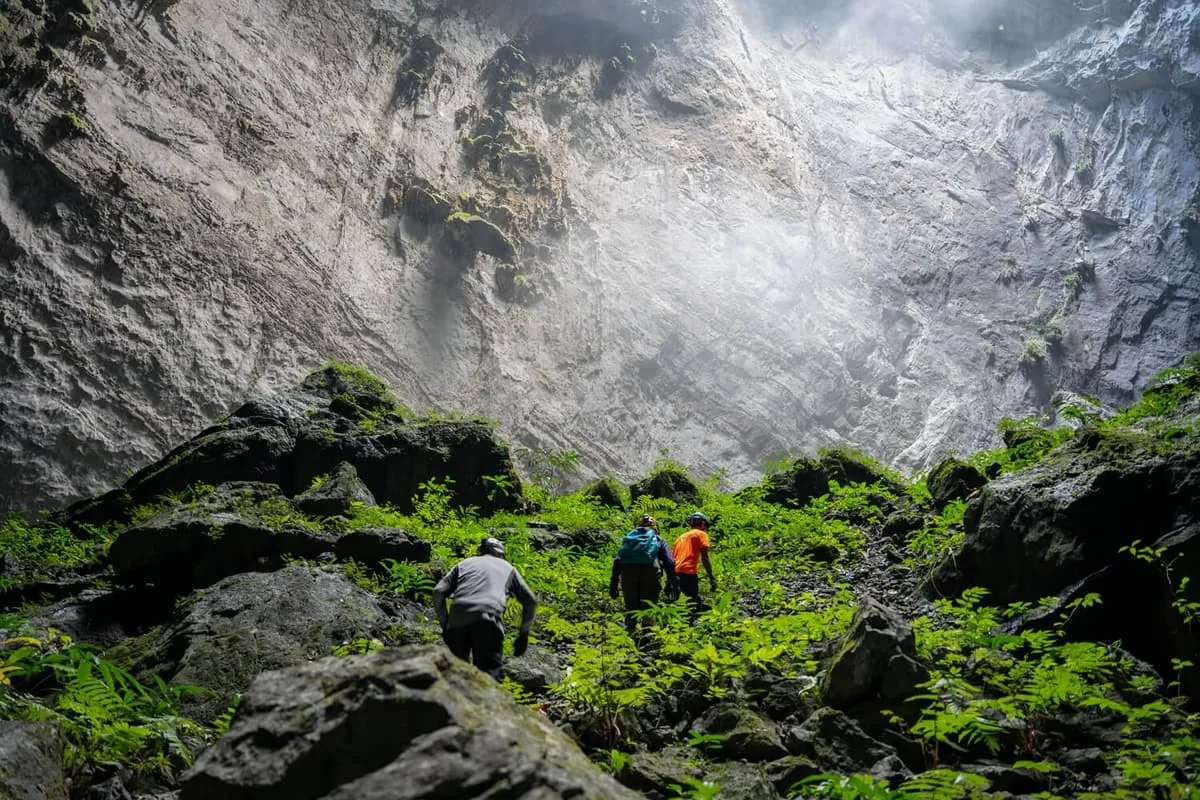
You arrive in Dong Hoi the afternoon before, sign the waiver, and let a safety expert inspect your boots and pack at the Oxalis office. Day one is a steep 350 metre descent into the jungle, a stop at Ban Doong village, then a few hours of trail and river crossings to Hang En, the world's third largest cave. You sleep on a sandbank beside an underground lake. That night alone would be a trip worth taking.
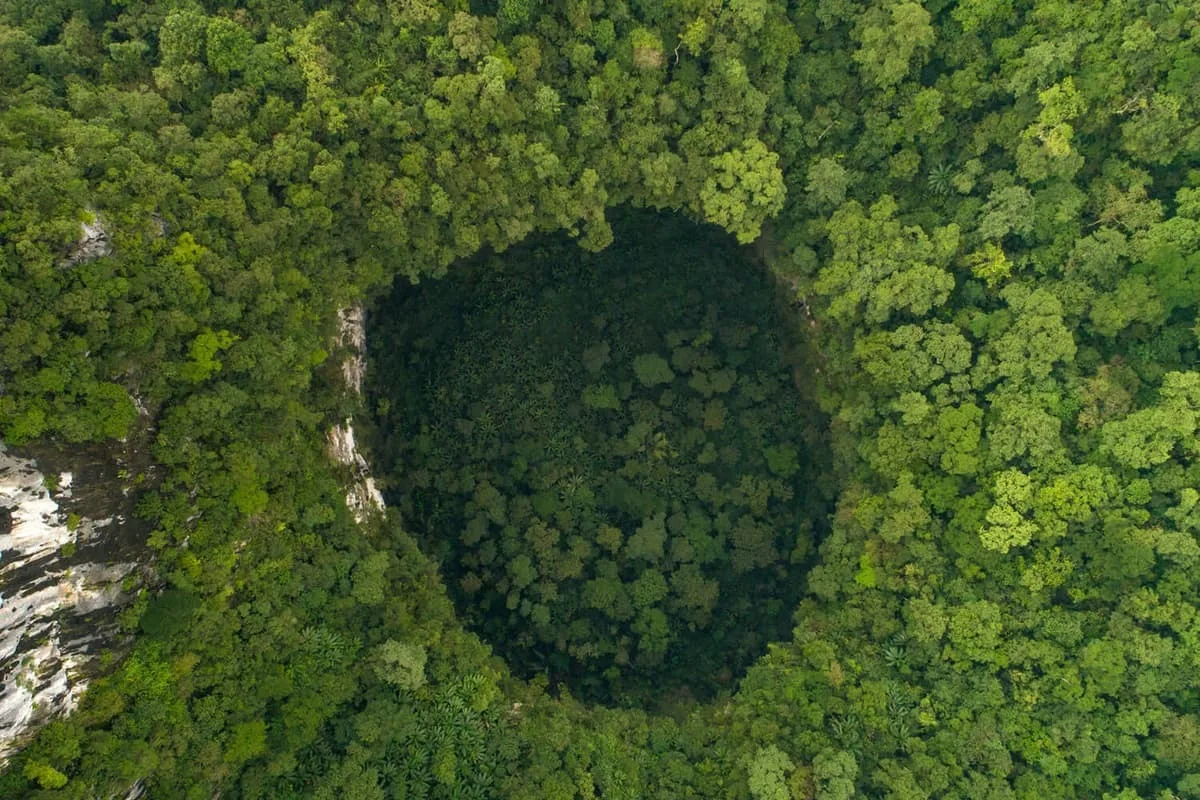
The next morning you trek out the back of Hang En and reach the mouth of Son Doong by midday. Getting in means an 80 metre rope descent in short rigged sections with the guides clipping you on. Inside, scale stops making sense. The ceiling runs hundreds of metres overhead. Two stretches of roof collapsed long ago, opening dolines, the sinkholes that let sunlight pour down and a genuine rainforest grow on the cave floor, complete with mist and birdsong underground. You camp two nights inside the cave itself.
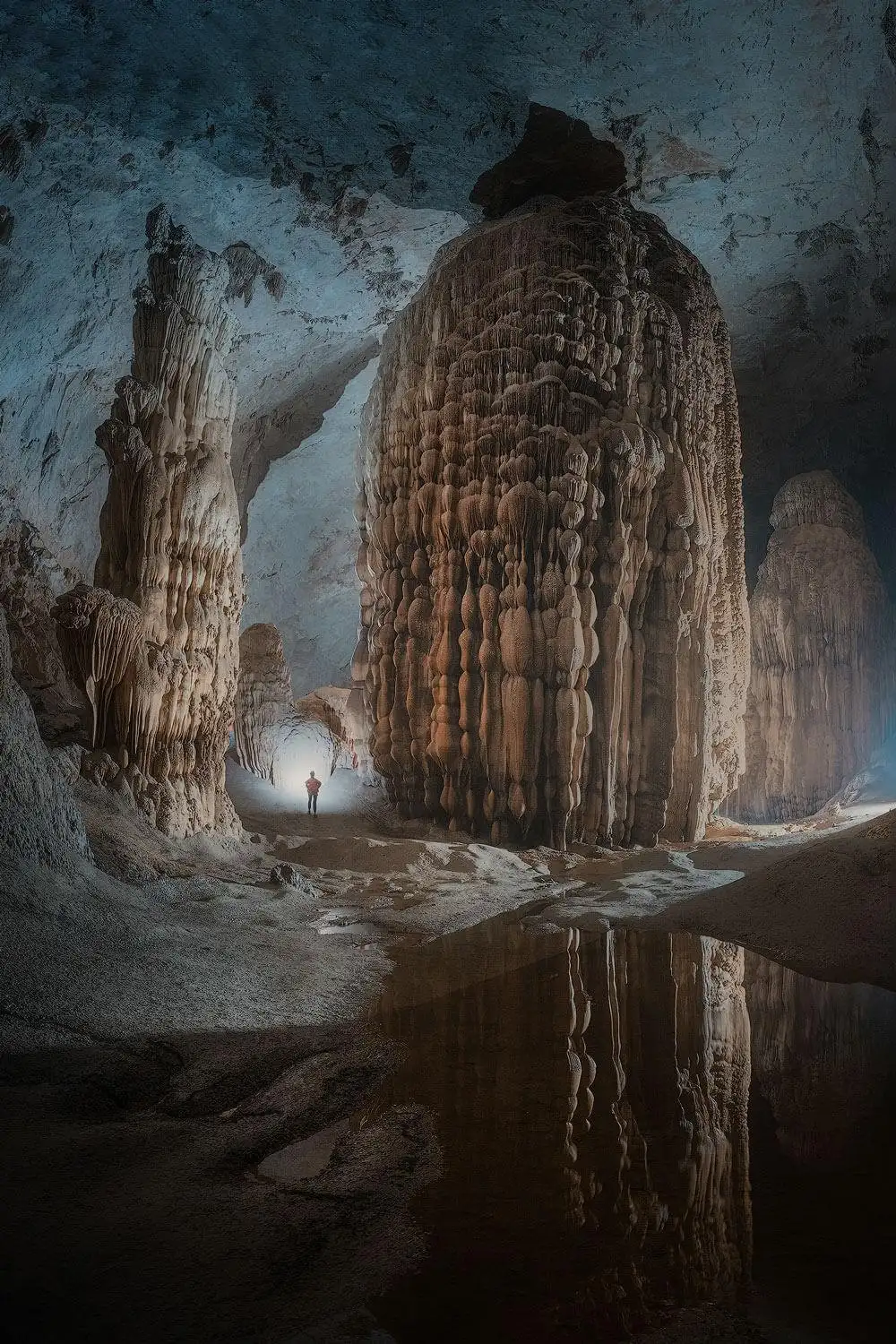
The last big obstacle is the Great Wall of Vietnam, a 90 metre wall of calcite flowstone near the far exit. The first 25 metres are near vertical, and you climb it on an 18 metre steel ladder and fixed ropes with the team feeding you up in three sections. Crest it and you see daylight from the exit. All in, you cover around 17 km of trekking and 8 km of caving.
Inside, scale stops making sense. The ceiling runs hundreds of metres overhead, sunlight pours through collapsed roof, and a real jungle grows on the cave floor.
How fit do you need to be
Fit, genuinely. You are on your feet eight to ten hours a day on wet clay over sharp limestone that grips like greased glass, with constant river wading and rope work. Oxalis rates the trip Level 6, their hardest, and they mean it. You do not need to be an athlete or a climber, but you need real stamina and no fear of being soaked and sore for four straight days.
Oxalis actually requires proof you have trained. In the 12 months before you go you are expected to have done at least one overnight trek and a couple of full days on your feet of 8 km or more, on varied terrain with decent elevation gain. Treat that as the floor, not the target. Start hiking with a loaded pack a few months out. If a long, hard, uncomfortable day on rough ground sounds like misery rather than a fair price for something extraordinary, this is not your trip, and that is fine.
What nobody tells you
The photos sell you cathedral light and emerald pools. They leave out the leeches. They are small and persistent, they get into your socks, and you will be doing a leech check every half hour on the jungle sections. Pack anti-fungal foot powder too, because people finish with the early stages of foot rot after four days of permanently wet feet. The cave 'showers' are cold water dripping from the ceiling, the compost toilet lives in a tent, and you wash in a cold river.
The other honest note: you will be tired in a way a normal holiday does not prepare you for. Plan a rest day or two in Phong Nha or Dong Hoi afterwards, because your legs will refuse to do anything useful. None of this is a reason to skip it. It is the reason it stays rare and unspoiled. Just go in knowing the trip is meant to be hard, not pampered.
When to go
The season runs January to August only. The cave closes the rest of the year because the river inside floods and the trip becomes genuinely dangerous. February through April is the sweet spot: the weather is drier, the river crossings are calmer, and the cave is at its most photogenic. Whatever you do, do not plan anything in this whole region from September to November, when the floods hit central Vietnam and tours shut down.
Can you still book it, and how
Son Doong is run only by Oxalis, and you book through their official website and nowhere else. Anyone else 'offering' Son Doong is reselling Oxalis or running a scam. Spots release by the year and disappear fast: 2026 and 2027 are gone, and 2028 is open and filling as of June 2026. If 2028 works for you, get your name down early and start training.
If a two-year wait or the price kills it, do not give up on the giant-cave experience. Hang Pygmy is the world's fourth largest cave, run by Jungle Boss, where you abseil in and camp on the cave floor for a night, usually bookable this season for a small fraction of the cost. Kong Collapse, also Jungle Boss, is the closest thing going to Son Doong itself, a tougher multi-day expedition with a 100 metre abseil and far fewer crowds. And Hang En, the cave you would sleep in on night one of Son Doong, can be done on its own as a gentler two day overnight. Any of the three gets you the feeling of standing inside something impossibly large without the Son Doong waitlist.
Common questions
How much does Son Doong cost?
Around $3,000 per person for the four day, three night expedition with Oxalis, the only licensed operator. That covers permits, guides, a large safety team, porters, all food and the gear.
Is Son Doong sold out?
Yes for 2026 and 2027. Spots for 2028 are open but go fast. If you cannot wait, Hang Pygmy or Hang En give you a similar giant-cave overnight that you can usually book this season.
Do you need to be fit for Son Doong?
Very. You trek eight to ten hours a day over rough ground, with river crossings and a 90m climb. Train for it in the months before you go.
How big is Son Doong?
It holds the largest cave passage on earth: roughly 9km long, with sections up to 200m tall and 150m wide, big enough to fit a 40-storey building or fly a Boeing 747 through. Inside there's a jungle, two giant skylights where the roof collapsed, an underground river and clouds that form near the ceiling.
Who discovered Son Doong, and when?
A local man, Ho Khanh, found the entrance in 1990 while sheltering from a storm, but the roar of wind and water kept people out. He relocated it in 2008, and a British Cave Research Association team led by Howard and Deb Limbert surveyed it in 2009, confirming it as the world's largest. Oxalis ran the first commercial expeditions in 2013.
Getting here
How to reach the caves
Phong Nha town (Son Trach) is the base for every cave. Here's the run from the most common starting points.
Want this cave built into a full Phong Nha plan?
Plan my trip