Hoe een lokale jager de grootste grot ter wereld vond (twee keer)
Het Hang & Trail-team · May 18, 2026
Ho Khanh stuitte in 1990 op een gat in de jungle, raakte het kwijt, vond het 18 jaar later terug en veranderde Phong Nha voorgoed. Het echte verhaal van Son Doong.
De korte versie
Son Doong is niet gevonden door een wetenschapper of een satelliet. Het werd in 1990 gevonden door een lokale houthakker, Ho Khanh, die schuilde voor een storm en koude wind uit een gat in de bosbodem voelde razen. Hij ging er nooit in, raakte de plek bijna twee decennia kwijt en wist hem pas in 2008 terug te vinden. In 2009 bracht hij een Brits speleologenteam naar de ingang, en binnen een jaar bevestigde de opmeting het: de grootste grotgang op aarde, die al die tijd in de heuvels boven zijn eigen dorp lag.
Als je vandaag Phong Nha binnenrijdt en je afvraagt waarom een rustig boerendistrict op elke hoek hostels, cafés en tourkantoren heeft, dan is dit het antwoord. Eén man, één grot, en een heel lange zoektocht om hem twee keer te vinden.
Ho Khanh, de man die van deze bossen leefde
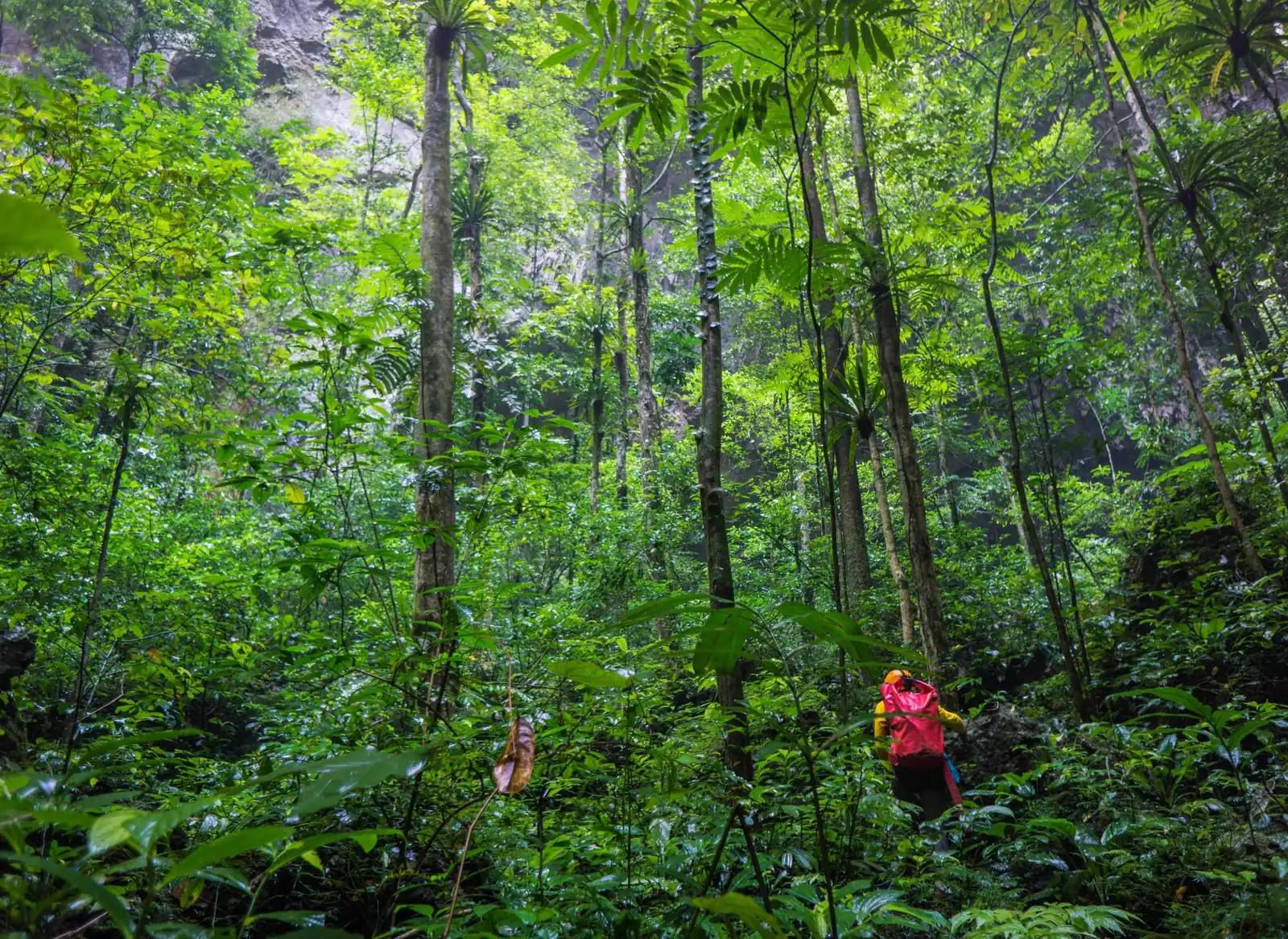
Ho Khanh groeide op in Phong Nha en verdiende zijn geld zoals de meeste mannen in het dorp dat in de jaren tachtig en negentig deden: in het bos. Hij kapte hout, hij jaagde en hij zocht naar agarhout, het geurige harshout dat echt geld opleverde voor wie bereid was er dagenlang diep de jungle voor in te trekken. De karstheuvels die nu een beschermd nationaal park zijn, waren gewoon zijn werkplek.
Dat is belangrijk voor het verhaal. Ho Khanh was niet verdwaald en had geen geluk. Hij kende deze bergen zoals jij je eigen straat kent. Hij wist welke grotmonden de jagers als schuilplaats gebruikten, waar de beekjes liepen, welke bergkammen je moest oversteken. Dus toen hij op iets stuitte dat hij nog nooit had gezien, viel hem dat op.
1990: een storm, en wind die uit de grond kwam
De datum waar de speleologen later op uitkwamen is 10 december 1990. Ho Khanh was op zoek naar hout toen er een storm opstak, en hij dook richting een rotswand om die uit te zitten. Onderaan vond hij een opening in de grond die hem nooit eerder was opgevallen, en twee dingen deden hem stilstaan.
Ten eerste de wind. Er stroomde koude lucht uit het gat, krachtig en constant, precies de tocht die alleen uit een heel grote lege ruimte onder de grond komt. Ten tweede het geluid: van ergens ver beneden het gebulder van stromend water, een ondergrondse rivier die hij wel kon horen maar niet zien. Hij klom niet naar beneden. De opening was steil en glad, de storm hing boven hem, en hij had geen touw en geen reden om het risico te nemen. Hij prentte in zijn geheugen wat hij van de route kon onthouden en ging verder met zijn dag.
Toen kwam het leven ertussen. De precieze route terug naar dat ene gat, in een bos vol rotswanden en zinkgaten die allemaal op elkaar lijken, glipte hem door de vingers. Hij kon niet weten dat hij net de grootste grot op de planeet had gevonden. Jarenlang bleef het een halve herinnering, één vreemde plek tussen de honderden waar hij langs was gekomen.
De Britse speleologen en de grot die niemand kon vinden
Vanaf het begin van de jaren negentig verkende een team Britse speleologen, georganiseerd rond Howard en Deb Limbert en samenwerkend met Vietnamese partners, systematisch de grotten van de provincie Quang Binh. In de loop der jaren brachten ze er honderden in kaart. Een deel van de methode was simpel: praat met de lokale jagers en houthakkers, de mannen die het bos echt doorkruisten, en vraag wat ze hebben gezien.
Ho Khanh vertelde hun over de grot met de ijskoude wind en de rivier die je binnenin hoorde bulderen. De speleologen wisten precies wat die combinatie meestal betekent, en ze vroegen hem hen erheen te brengen. Dat lukte niet. Hij ging opnieuw zoeken, meer dan eens, jarenlang. Het bos gaf de grot niet prijs. Rond 2000 probeerde hij het op hun aandringen nog eens en kwam hij alsnog met lege handen terug. De grot die hij per ongeluk had gevonden, liet zich met opzet niet meer vinden.
Dit is het deel dat het ontdekkingsverhaal eerlijk maakt in plaats van netjes. Son Doong de eerste keer vinden kostte een storm en een toeval. Hem de tweede keer vinden kostte zo'n achttien jaar mislukken.
2008: teruggevonden, en eindelijk naar binnen
In 2008 viel het kwartje. Op weer een tocht het bos in vond Ho Khanh de ingang terug, en deze keer markeerde hij hem goed, zodat hij niet opnieuw kon verdwijnen. Hij liet de Limberts weten dat hij hem had.
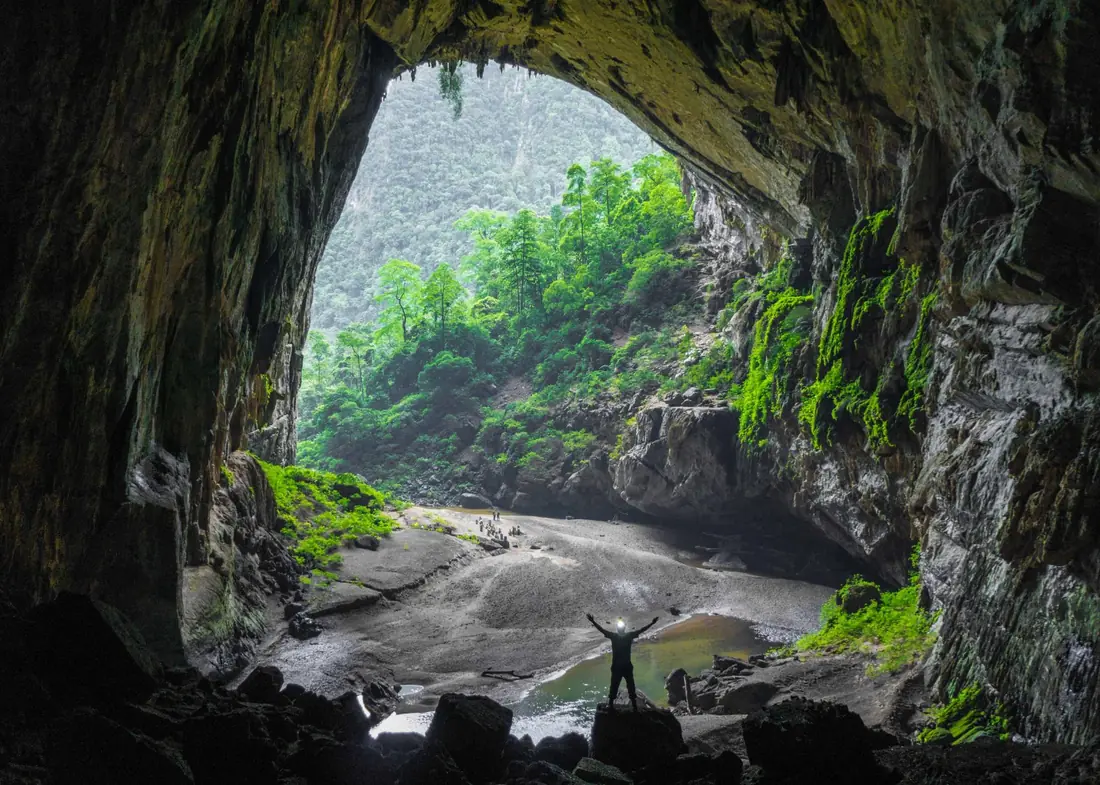
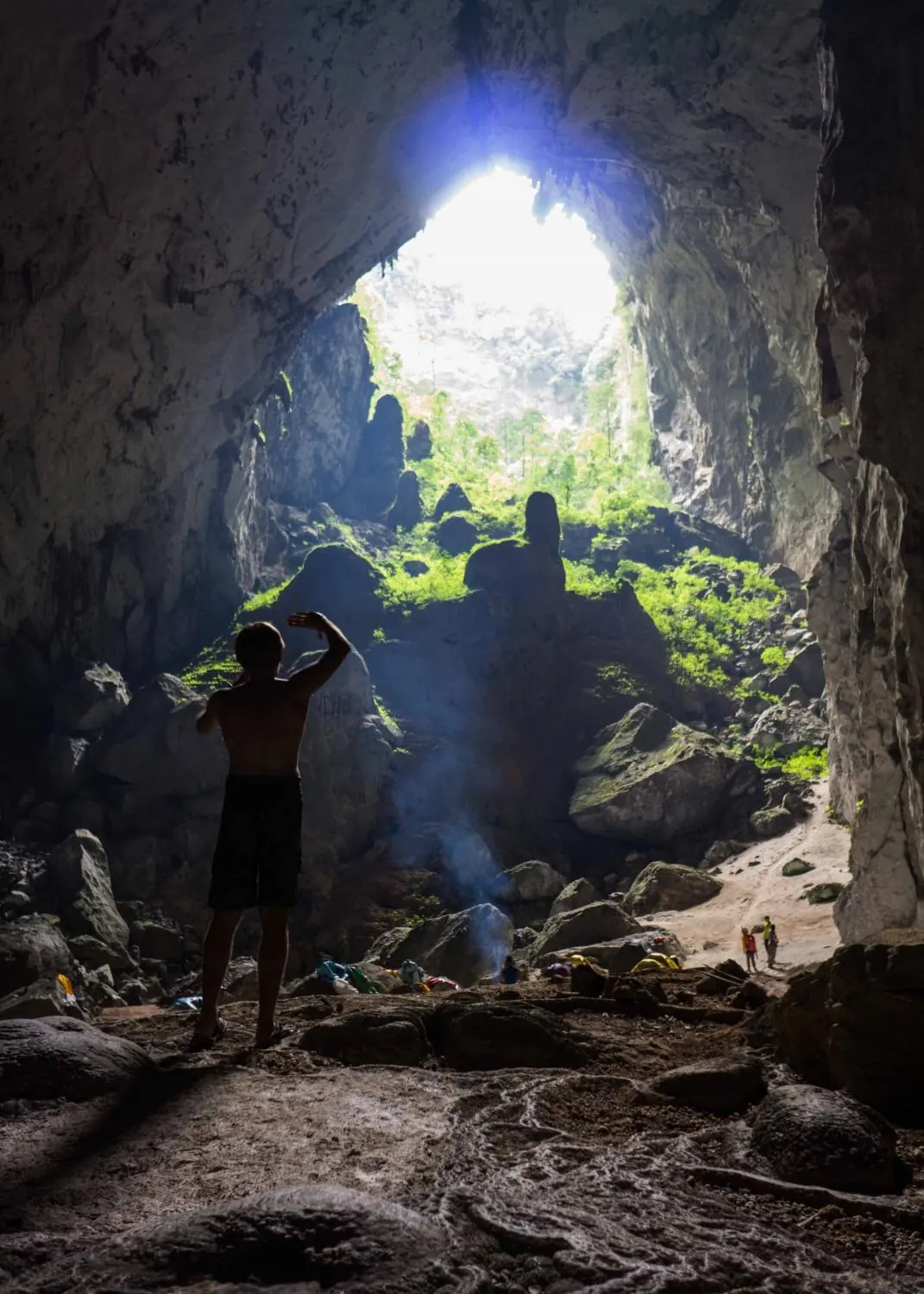
In april 2009 bracht hij het Britse speleologenteam naar de plek en mee naar beneden. Peter MacNab was een van de eersten die door de ingang ging, en waar het team in terechtkwam, deed hen verstijven. De gang was zo breed en zo hoog dat hun lampen de wanden aan de overkant en het plafond niet konden bereiken. Er groeide een bos binnenin, gevoed door licht dat door ingestorte stukken plafond viel, dolines genoemd, met zijn eigen wolken en zijn eigen weer. Ze noemden de grot Son Doong, naar het dorp Doong en de berg waarachter hij ligt.
Die eerste trip maakten ze niet af. Diep in de grot stuitten ze op een glinsterende calcietmuur van ongeveer 60 m hoog die de doorgang blokkeerde. Ze noemden hem de Great Wall of Vietnam, en in 2009 hadden ze geen manier om erover te komen. Ze keerden om in de wetenschap dat de grot doorliep, en dat nog niemand wist hoe ver.
2010: over de muur, en een wereldrecord
Het team kwam in 2010 terug met klimmateriaal. Op 17 maart 2010 kwamen ze over de Great Wall of Vietnam, drongen ze door tot het einde van de gang en maakten ze de opmeting af. De cijfers waren absurd, in de beste zin. Son Doong liep ongeveer 9 km, met een hoofdgang tot 200 m hoog en 150 m breed, en een volume van rond de 38,5 miljoen kubieke meter. Een Boeing 747 zou door het grootste deel kunnen vliegen zonder een vleugel te raken.
Daarmee was het, gemeten naar het volume van de gangen, de grootste grot op aarde, ruim groter dan de vorige recordhouder in Maleisië. Guinness World Records bevestigde het in 2013, en een reportage in National Geographic zette die onmogelijke foto's in 2014 voor de hele wereld neer. Daarna was Phong Nha geen geheim meer.
Wat het allemaal is geworden
De grot wordt kort gehouden, en dat is bewust. Maar één operator, Oxalis, heeft de vergunning, en er mogen maar ongeveer 1.000 mensen per jaar naar binnen. De expeditie van vier dagen en drie nachten kost ongeveer 2.900 € (79.500.000 ₫, prijzen gecontroleerd in juni 2026), wat stevig klinkt tot je ziet hoe groot het team van gidsen, veiligheidsmensen en dragers is dat nodig is om je er veilig doorheen te krijgen. Kun je geen plek krijgen of komt die prijs niet uit, dan zijn de boekbare reuzen in de buurt het eerlijke antwoord: Hang En voor ongeveer 320 € (8.800.000 ₫) bij Oxalis, die ook die vergunning heeft, of Hang Pygmy, de vierde grootste grot ter wereld, voor ongeveer 290 € (7.900.000 ₫) bij Jungle Boss, waar je meestal gewoon voor dit seizoen kunt boeken. Prijzen gecontroleerd in juni 2026.
Ho Khanh kreeg waar hij recht op had. Hij werd onderdeel van de organisatie die de grot runt die hij vond, en hij opende een homestay in Phong Nha die hij nog steeds runt. De inkomsten uit die beperkte expedities vloeien terug naar lokaal werk als gids en drager, en dat is voor een groot deel de reden dat het dorp is gegroeid zoals het is gegroeid.
Dus als je de volgende keer over de hoofdstraat rijdt en langs een bordje van een homestay met de naam Ho Khanh komt, doe het dan even rustig aan. De reden dat je hier überhaupt kunt zijn, de reden dat deze vallei een toerisme-economie heeft, is een jager die in een storm een koude wind voelde, de plek achttien jaar kwijt was en weigerde te stoppen met zoeken.

Veelgestelde vragen
Kan ik in de homestay van Ho Khanh in Phong Nha overnachten?
Ja. De man die Son Doong vond, runt een echte homestay in het dorp Phong Nha, en die werkt als gewone budgetaccommodatie die je net als elke andere kunt boeken, zonder dat er een expeditie aan te pas komt. Hij ligt aan de hoofdstraat tussen de cafés en tourkantoren. De kamers zijn eenvoudig en goedkoop, meestal rond de 11 tot 17 € (300.000 tot 460.000 ₫, prijzen gecontroleerd in juni 2026), afhankelijk van het seizoen. Het is een ingetogen plek en geen museum, dus ga er voor een goedkoop bed en een stille band met het verhaal, niet voor een rondleiding langs de ontdekking.
Kan ik Son Doong echt in, of kan ik er alleen over lezen?
Je kunt naar binnen, maar alleen op de vergunde expeditie van vier dagen die Oxalis draait, met een limiet van ongeveer 1.000 bezoekers per jaar, voor rond de 2.900 € (79.500.000 ₫, prijzen gecontroleerd in juni 2026). Er is geen dagbezoek, geen uitzichtpunt en geen manier om de grot buiten het vergunningensysteem om te zien. De plekken voor een bepaald jaar zijn meestal maanden van tevoren weg. Komt de datum of de prijs niet uit, dan geven de boekbare reuzen in de buurt, Hang En bij Oxalis of Hang Pygmy bij Jungle Boss, je dezelfde schaal aan gangen voor een fractie van de kosten.
Wat was de Great Wall of Vietnam die de eerste opmeting stopte?
Het is een steile wal van glinsterend calciet van ongeveer 60 m hoog die de hoofdgang diep in Son Doong blokkeert. Het team van 2009 kon er niet overheen en keerde om zonder te weten hoe ver de grot doorliep. Ze kwamen in 2010 terug met klimmateriaal, kwamen er op 17 maart overheen en maakten de opmeting af die het wereldrecord bevestigde. Op de standaardexpeditie van vandaag is deze muur beklimmen met touwen en een vaste ladder het laatste obstakel voordat je naar buiten gaat, dus het blijft letterlijk het hoogtepunt van de trip.
Wil je hier een echt plan van maken? Plan mijn reis →