What it's actually like to sleep inside a giant cave
The Hang & Trail team · April 14, 2026
The marketing photos do not capture it. Here is what camping inside Hang En, Son Doong or Hang Pygmy is actually like, hour by hour.
The short version
Sleeping inside a cave in Phong Nha is colder, darker and quieter than the photos let on, and that is the whole point. The chamber is so big your tent feels like a toy in a hangar, the temperature sits around 21C so you actually want a warm layer, and once the headlamps go off the dark is total. You wash in a cold river, the toilet is a composting bucket in a tent, and dinner is cooked over a single burner by the porter team. Most people sleep badly the first hour and then better than they have in years. It is the part of a Vietnam trip people describe first when they get home.
Three caves give you the full overnight: Hang En at $333 (8,800,000 VND, Oxalis, prices checked June 2026), Hang Pygmy at $310 (7,900,000 VND, Jungle Boss, prices checked June 2026), and Son Doong at $3,000 (79,500,000 VND, Oxalis, prices checked June 2026) if budget and the wait are no object.
The camp setup: tents, mattresses and where you sleep
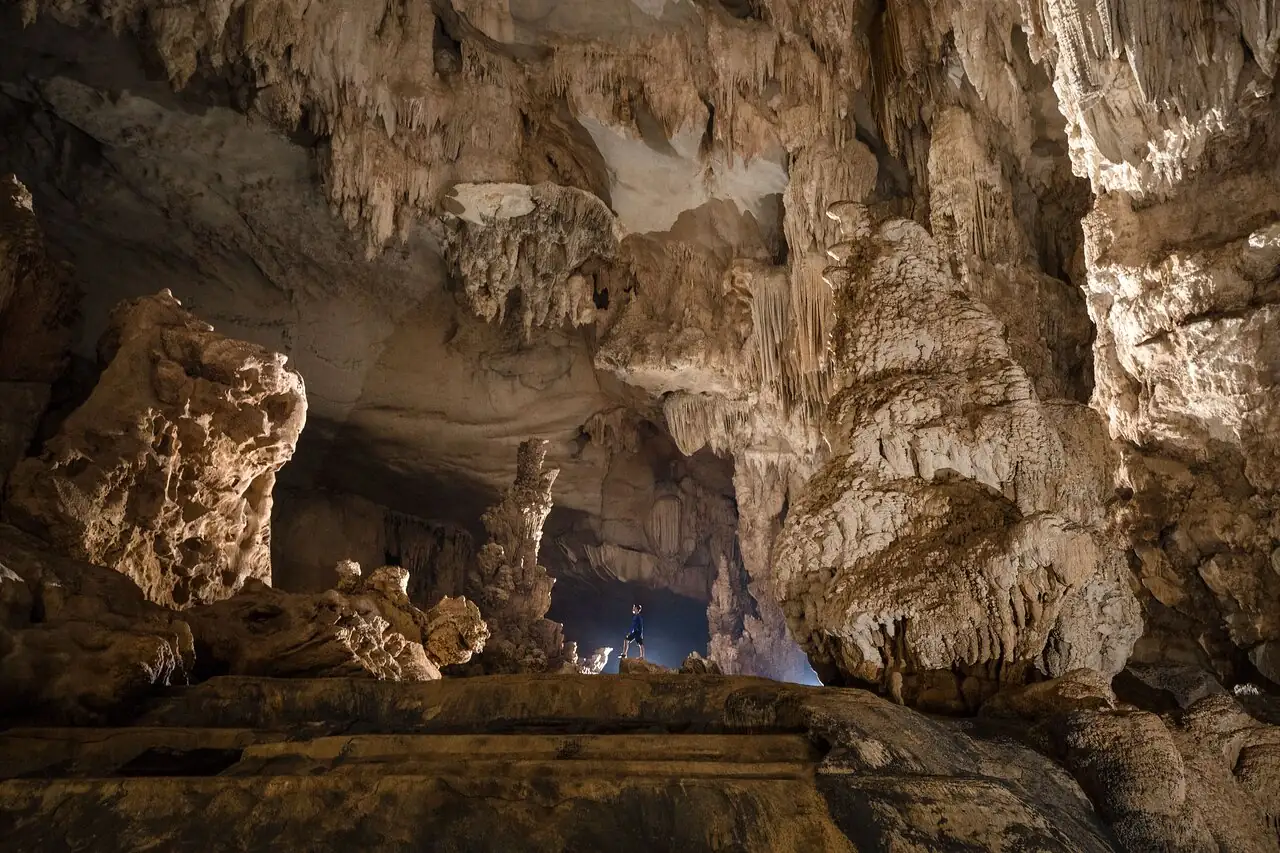
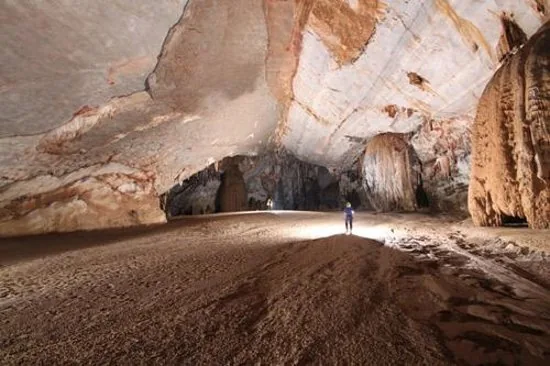
You arrive at camp in the late afternoon after several hours of trekking, and by the time you do, the porters have already set everything up. Tents sit in neat rows on a sand beach (Hang En), a flat sandy terrace above the river (Son Doong's dolines), or a rock platform near the entrance (Hang Pygmy). The cave is enormous around them, which makes the little cluster of tents look like a model village someone left on a stage.
The bedding is better than the word camping suggests. On the Oxalis trips you get a two-layer mattress, one firm and one soft, a pillow and your own sleeping bag, all prepared separately rather than shared. The Jungle Boss camp in Hang Pygmy runs a real mattress, a pillow and a blanket, with a fan on warm nights. Nobody is roughing it on a thin mat. The gear is rated for the cold that comes later, but you still feel the scale of the space pressing in around your tent.
Dinner cooked at camp
Dinner is cooked on site over a single-burner stove or a fire by the porter and cook team, and it is genuinely good. Expect rice with several hot dishes around it: stir-fried vegetables, fresh fish or pork ribs, a beef and vegetable soup, all hot and more generous than trail food has any right to be deep inside a cave. There is hot tea, and often beer or homemade rice wine, the local happy water, if you want it.
The detail that sticks with people is that the team eats together with the group. You are not being served at arm's length. At Hang En you can swim in the lagoon while the cooks work, which is the standard way to rinse off the jungle before you eat. Conversation drifts to the next day, the guides' stories, and the slow realisation that the room you are sitting in is a cave the size of a stadium.
The dark and the cold nobody warns you about
Cave air holds steady at roughly 21C year-round, which feels wonderful when you arrive sweating and cool to genuinely cold by the middle of the night. This is the thing first-timers get wrong: they pack for tropical Vietnam and shiver. Bring a warm layer for inside the tent, and on the colder trips bed socks and a beanie are not overkill. The damp adds to it, since your trekking clothes never fully dry out underground.
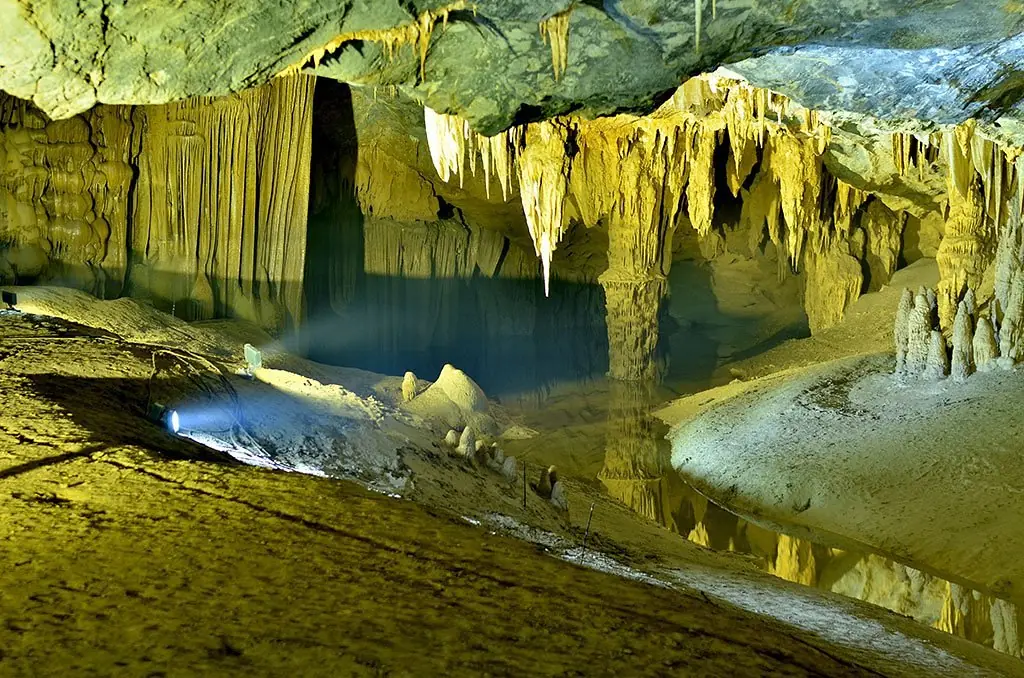
Then there is the dark. Once the last headlamp clicks off in a deep chamber, you get a black you almost never meet above ground. No moon, no stars, no glow on the horizon, nothing for your eyes to adjust to. Your headlamp's beam reaches maybe 20 metres and then dissolves into nothing. At the doline camps in Son Doong there is faint moonlight filtering down through the collapsed roof, which is the exception. Everywhere else, the dark is the kind that makes you lose track of which way is up.
The composting toilet and washing in cold water
The toilet is a composting setup, and it is more civilised than you fear and less than you would like. It is a normal toilet seat over a bucket and bag, pitched inside its own tent for privacy, with a scoop of rice husks you tip over the waste to dry it and kill the smell. When a bucket fills, a porter seals it, carries it out of the cave and buries it at a designated spot, where it composts down to fertiliser over a couple of months. Nothing is left behind. That is the trade for sleeping somewhere this untouched.
Washing means cold water. At Hang En and Hang Pygmy you rinse off in the river, lake or stream right at camp, no soap or shampoo, because the operators keep all of it out of the water to protect the cave system. Most people switch to wet wipes and dry shampoo for the actual hygiene and treat the river dip as the fun part. On the longer Son Doong trip the cave showers are just cold water dripping from the ceiling. One honest Hang En note: you are bathing in a lagoon that thousands of swifts roost above, so there is guano, and you learn to ignore it.
The night: the river, the swifts and how well you sleep
The soundtrack is water and birds and nothing else. Deep in a cave it is the drip and the distant rush of the underground river, steady enough that it turns into white noise. At the Son Doong doline camps the river runs more than 50 metres below your tent, so the sound rises up to you all night. At Hang En the noise is the swifts. Thousands of them roost in the roof and chatter through the dark, and the honest truth is the racket takes getting used to. More than one person has lain awake the first hour wondering if it ever stops.
After that, sleep splits people two ways. Some find the silence and the dark unnerving and doze lightly. Others, once they have stopped straining to hear anything, sleep harder than they have in years, with no phone glow, no traffic and no dawn light to pull them out early. The cold is what wakes people, not noise, which is the best argument for that extra layer.
Waking up inside a cave
If your camp has an opening to the outside, the morning is the reason you came. At Hang En the entrance shifts from pitch black to grey to deep gold as the sun climbs, and around first light the swifts lift off in their thousands and pour out through the cave mouth in a long shifting ribbon. You hear the rush of wings before you see much. On a clear cool-season dawn, shafts of light angle down through the mist at the same time, and the swifts and the light beam happen together. That is the photo that sold most people on Phong Nha, and it delivers. Be at the entrance before sunrise rather than scrambling out of your tent once it has already started.
Son Doong's doline mornings do something stranger: mist rises off the river and a real rainforest sits on the cave floor, so you wake to birdsong and fog underground. Wherever you are, breakfast is hot, simple and big, and then you trek out, often by a different route, with the chamber behind you and daylight ahead.
Which cave to camp in
If you only do one overnight, Hang En is the one most people pick, and it is the gentlest way to sleep inside a world-class cave. You get the sand beach, the lagoon swim and the famous sunrise swifts, at $333 (8,800,000 VND, Oxalis, prices checked June 2026), with the season running roughly December to mid-September and the light beam best from December to March.
If you want the big-cave hit with more adventure and a price you can actually book this season, Hang Pygmy is the call. You abseil about 10 metres in, swim the underground river, and sleep in the world's fourth largest cave for $310 (7,900,000 VND, Jungle Boss, prices checked June 2026). It runs January to August and rarely sells out months ahead the way Hang En's cool-season dates do. Tiger Cave is the shorter, sharper Jungle Boss expedition if you want a jungle camp with a cold cave swim for $490 (12,500,000 VND, prices checked June 2026).
Son Doong is the ceiling: three nights inside the largest cave on earth, doline camps with their own weather, at $3,000 (79,500,000 VND, Oxalis, prices checked June 2026). The catch is the queue. The 2026 and 2027 seasons are gone, so a booking now is really a 2028 trip. If you cannot wait that long or spend that much, Hang Pygmy gives you the camping-inside-a-giant feeling for a tenth of the price, and you can be sleeping in it this season.
Common questions
What is it actually like to sleep inside a cave?
Strange at first, then better than you expect. Your tent feels tiny in a chamber the size of a stadium, the air sits around 21C so it turns genuinely cold by the middle of the night, and once the last headlamp clicks off the dark is total. The first hour most people lie awake listening to the underground river or, at Hang En, thousands of swifts in the roof. After that, with no phone glow, no traffic and no dawn light, a lot of people sleep harder than they have in years.
Are there toilets when you camp in a cave?
Yes, a composting toilet: a normal seat over a bucket and bag, pitched in its own tent for privacy, with rice husks you scoop over the waste to kill the smell. When a bucket fills, a porter seals it, carries it out and buries it to compost down to fertiliser. Nothing is left behind, which is the trade for sleeping somewhere this untouched.
Do you get cold or wet sleeping in a cave?
Both, mildly, and it catches first-timers out. Cave air holds near 21C year-round, which feels great when you arrive sweating and cold by 2am, so pack a warm layer and on cooler trips bed socks and a beanie. You also stay a bit damp, since trekking clothes never fully dry underground and washing means a cold rinse in the river with no soap. The cold is what wakes people, not the noise, so that extra layer is the single best thing you can bring.
Want this turned into a real plan? Plan my trip →