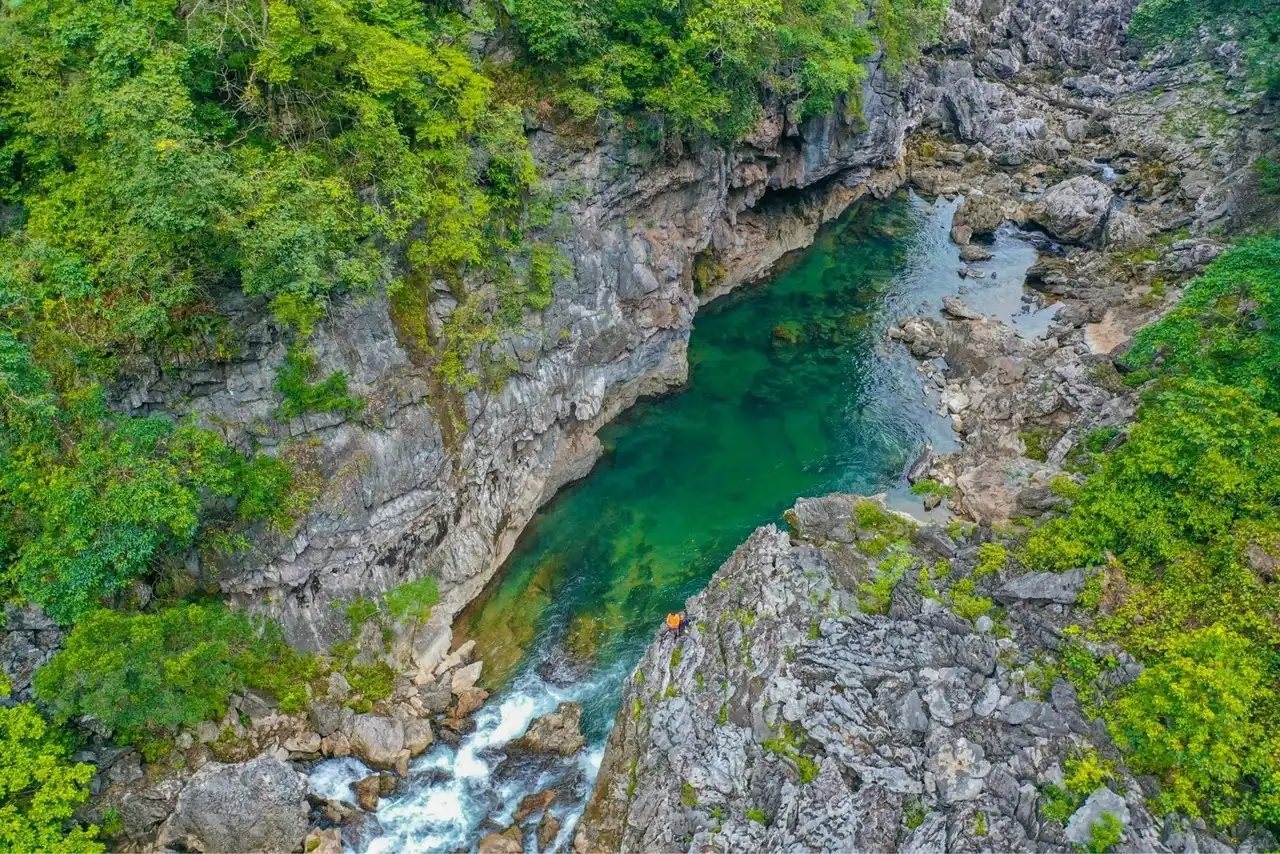
At the 47th session of the World Heritage Committee in July 2025, UNESCO approved the joint listing of Phong Nha-Ke Bang National Park (Vietnam) and Hin Nam No National Park (Laos) as a single transboundary World Heritage Site. The two parks share the same karst landscape across the border; the listing recognises that landscape as one of the most outstanding examples of limestone geology on earth.
For visitors, the change is mostly symbolic in the short term. The Vietnamese caves, operators and gate fees you'd plan around are unchanged. The new listing tightens the conservation framework on both sides of the border and opens the door, slowly, to cross-border eco-tourism routes that don't exist today.
The practical effect over the next few years will be on the Laos side, where the existing cave-and-jungle infrastructure is far less developed than around Son Trach. Hin Nam No is currently visitable only via small group expeditions out of Khammouane; the joint listing brings funding for trail and visitor-centre improvements there.

Nothing about your Phong Nha plan changes today. We'll update this post as the cross-border activity restrictions and any new visitor processes land.