
Por qué solo 1.000 personas ven Son Doong cada año
El equipo de Hang & Trail · April 16, 2026
Casi cualquier cueva de ese tamaño tendría 100.000 visitantes al año. Son Doong tiene 1.000. La historia de cómo se fijó el tope y por qué se ha mantenido.
La respuesta corta
Son Doong limita el turismo a unas 1.000 personas al año a propósito, y es una de las mejores decisiones que ha tomado Vietnam por este lugar. Es la cueva más grande del planeta, lo bastante grande como para tener su propia jungla, su río y su clima, y algunas de sus salas contienen formaciones que no encuentras en ningún otro sitio. Deja pasar a 100.000 personas al año y las pierdes. Deja pasar a 1.000, por una única ruta autorizada y con normas estrictas de no dejar rastro, y la cueva en 2026 se parece bastante a la que midieron los topógrafos en 2009. El tope es también la razón de que una plaza cueste 2.900 € (79.500.000 ₫, Oxalis, 4 días y 3 noches, precios verificados en junio de 2026) y se agote con uno o dos años de antelación. La escasez es el producto, y está haciendo su trabajo.
Cómo se encontró la cueva y por qué eso importa
Un vecino de la zona llamado Ho Khanh dio con la entrada por primera vez en 1990, mientras se resguardaba de una tormenta en una salida al bosque a por madera de agar. Volvió a perderla y tardó hasta 2008 en localizar de nuevo la boca. En 2009 una expedición espeleológica británico-vietnamita dirigida por Howard y Deb Limbert la topografió y anunció lo que decían los números: con unos 38,5 millones de metros cúbicos, Son Doong era la galería de cueva más grande del mundo.
Ese anuncio creó la bifurcación. Vietnam tenía a la vez un titular mundial recién estrenado y una cueva frágil. La disyuntiva era abrirla a las masas o protegerla. Quienes mejor conocían la cueva, el equipo de topografía, defendieron con fuerza la protección, porque habían visto lo que el tránsito de pies hace a las cuevas en otros lugares. La provincia escuchó, y aquella decisión temprana marcó todo lo que vino después.
De dónde sale el tope de 1.000
Son Doong la gestionan las autoridades del Parque Nacional Phong Nha-Ke Bang, y el tour funciona bajo una licencia exclusiva en manos de Oxalis Adventure, el único operador autorizado a entrar con gente. Los viajes piloto empezaron en 2013 y el tour comercial abrió en 2014. Desde el principio el acuerdo llevaba un techo anual duro de unos 1.000 visitantes, y ese número se ha mantenido en todas las temporadas de demanda creciente desde entonces.
Es un techo real, no marketing. En toda la primera década de turismo la cueva vio solo 7.552 exploradores en total, a cierre de 2024. Los grupos también son diminutos: unos diez clientes por expedición, apoyados por un equipo de treinta o más guías, personal de seguridad y porteadores. Las cuentas son deliberadas. Menos gente, más ojos encima de cada uno, menos posibilidades de que alguien toque lo que no debe.
Qué protege realmente el tope
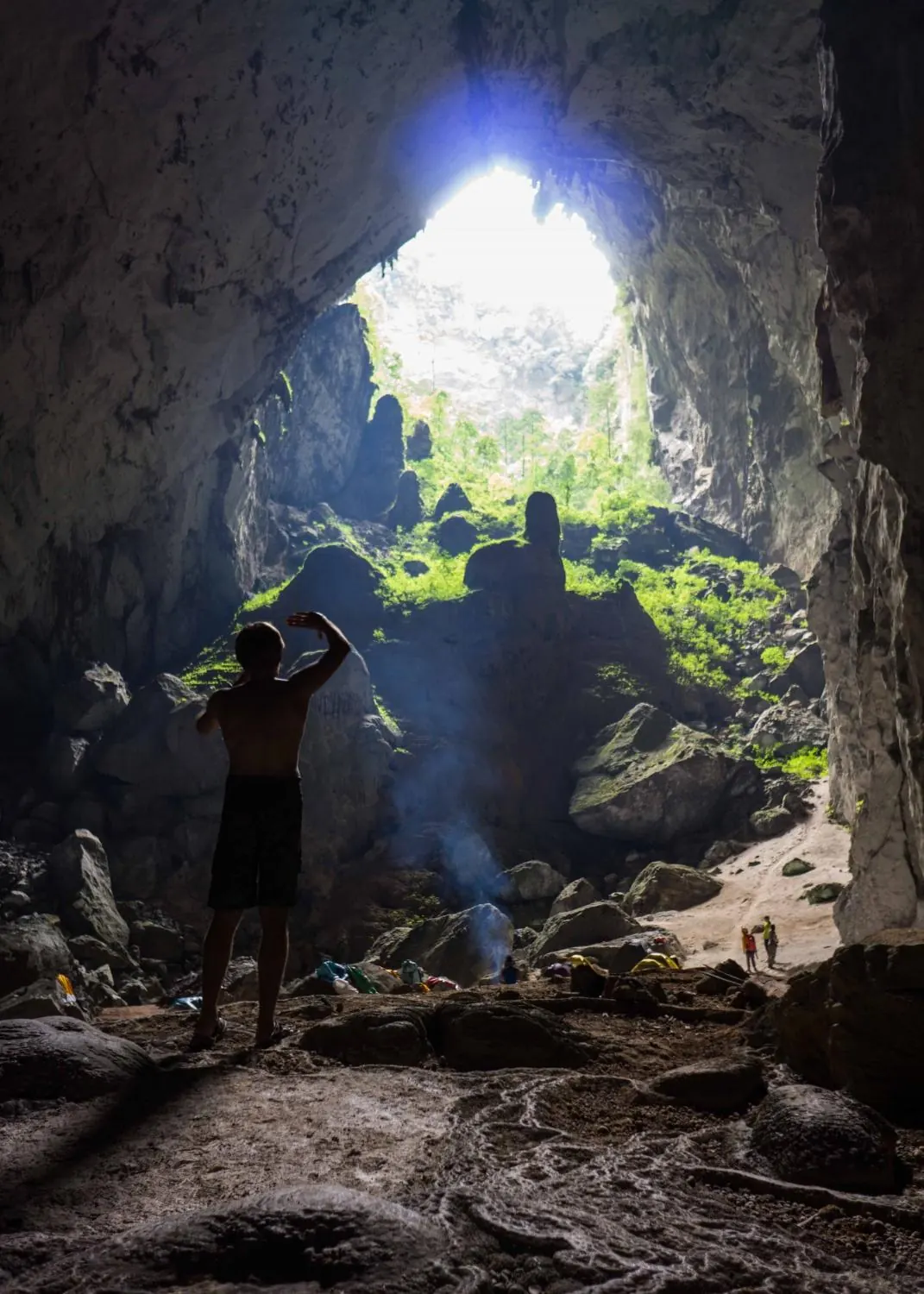
Cosas concretas, no vaguedades. Son Doong tiene perlas de cueva que van del tamaño de una alubia al de una pelota de béisbol, posadas en gours, y a esa escala no se encuentran casi en ningún otro lugar del planeta. Tiene corales fósiles de 300 millones de años en la roca, dos parches de jungla que crecen bajo secciones de techo derrumbado llamadas dolinas y al menos siete especies que viven allí y en ningún otro sitio.
Esas especies endémicas son la razón silenciosa de que el tope sea tan estricto. Criaturas que evolucionaron en un aislamiento casi total reaccionan mal a las multitudes, a la luz e incluso al dióxido de carbono del aliento de mucha gente. Mil visitantes cuidadosos al año son una carga que el sistema absorbe. Decenas de miles, no. El agua del río subterráneo sigue limpia, las colonias de murciélagos siguen criando sin molestias y las partes más frágiles de la cueva están simplemente vetadas al turismo. Compáralo con cuevas turísticas más antiguas de Estados Unidos, donde décadas de tránsito apagaron las formaciones y cambiaron el clima interior para siempre.
El teleférico que nunca se construyó
En 2014 el Sun Group, un gran promotor turístico vietnamita, lanzó la idea de un teleférico que cruzara el parque nacional hacia el sistema de cuevas, un proyecto cifrado en unos 200 millones de euros y de varios kilómetros de longitud. Sobre el papel prometía empleo y acceso fácil. En la práctica habría movido hasta 1.000 personas por hora junto a un lugar pensado para 1.000 al año.
El rechazo fue inmediato y ruidoso. Una ambientalista vietnamita, Huong Le, impulsó la campaña Save Son Doong, que reunió más de 170.000 firmas, y las comunidades espeleológica y local se sumaron. Los científicos advirtieron de que la obra podía dañar el bosque de la entrada, forzar el techo de la cueva y provocar más derrumbes. Sun Group aparcó el plan. Una propuesta posterior de 2017, de otro promotor, FLC Group, apuntó a la cercana Hang En y luego se apagó. El resultado de titular se mantiene: el acceso a Son Doong sigue siendo a pie, con cuerdas, y nada más. Esa pelea pública es buena parte de por qué el tope sobrevivió.
Por qué solo funciona de enero a agosto
Los tours van de enero a agosto y la cueva cierra al público de septiembre a diciembre. Dos motivos, los dos buenos. El primero es la seguridad. La estación húmeda trae tormentas tropicales y lluvias fuertes, y el río subterráneo de Son Doong puede subir rápido e inundar galerías enteras. No quieres estar dentro cuando eso pasa.
El segundo es la recuperación. Esos meses cerrados le dan a la cueva un descanso largo sin presencia humana ninguna, tiempo para que el suelo, el agua y la fauna se reequilibren antes de la siguiente temporada. Así que la temporada no es Oxalis poniéndose exquisito con el tiempo. Es un barbecho incorporado, la misma lógica que aplica una pesquería bien llevada o un sendero de parque nacional, trasladada a una cueva.
Sin dejar rastro, y la gente que lo hace posible
Dentro, las normas son estrictas y físicas. Hay una única ruta marcada para mantener las botas fuera del suelo delicado y lejos de las formaciones. No se construye nada permanente. Los baños son sistemas de compostaje diseñados para que los residuos no lleguen al agua de la cueva, y el resto de la basura, toda, sale del bosque a hombros y se trata en instalaciones adecuadas. Los campamentos se mueven para que ningún trozo de suelo se lleve el desgaste en todos los viajes.
La verdad poco glamurosa es que casi todo ese trabajo se carga sobre las espaldas de la gente. Los equipos de porteadores acarrean el material, la comida, los residuos y el equipo de seguridad hacia dentro y hacia fuera. Oxalis ha pasado de cinco empleados a más de 500, alrededor del 95 por ciento locales, con unos 350 porteadores, y muchos de esos porteadores talaban y cazaban ilegalmente en este mismo bosque. El tope es lo que hace que ese cambio salga a cuenta. Deja una buena propina al equipo de porteadores cuando vayas. El modelo de conservación funciona con sus ingresos, y son ellos los que de verdad mantienen limpia la cueva.
Acceso frente a preservación, sin rodeos
Hay una crítica justa enterrada en todo esto. Un viaje de 2.900 € que lleva a mil personas al año es, por definición, algo que la mayoría de los viajeros nunca hará. Un único operador con licencia tiene las llaves. Llámalo conservación o llámalo cuello de botella de lujo: las dos cosas son en parte ciertas, y un documental de verdad, A Crack in the Mountain, se metió justo en esa tensión. La postura honesta es que algo de control en la puerta es el precio de que la cueva siga existiendo en buen estado. Una barra libre no democratizaría Son Doong. La destrozaría, y entonces nadie se queda con la versión buena.
Si los 2.900 € o la espera te quedan lejos, no estás fuera del Vietnam de las cuevas gigantes. Hang Pygmy, la cuarta cueva más grande del mundo, se hace en 2 días durmiendo dentro por 290 € (7.900.000 ₫, Jungle Boss, precios verificados en junio de 2026), y normalmente puedes reservarla esta misma temporada. Hang En, la tercera más grande, con los famosos vencejos al amanecer, cuesta 320 € (8.800.000 ₫, Oxalis, precios verificados en junio de 2026). La expedición a Kong Collapse con Jungle Boss te da un rápel de 100 m dentro de una dolina y escala real de expedición sin el precio de Son Doong ni la cola de varios años. El mismo karst, los mismos equipos de espeleología, una fracción del coste.
Qué significa esto a la hora de reservar
Planifica pronto o planifica sin ella. Son Doong se agota con ocho a doce meses de antelación y las temporadas de 2026 y 2027 ya están vendidas, así que una reserva seria de Son Doong es en realidad una reserva para 2028. Apúntate ya a una lista de espera si tiene que ser esta cueva, entrena mientras tanto y asume que la fecha manda sobre todo tu viaje a Vietnam, y no al revés.
Reserves lo que reserves, reserva con el operador con licencia y pasa de cualquiera que te ofrezca un atajo no oficial dentro de Son Doong. Los viajes clandestinos existen, son inseguros y socavan justo el modelo que ha mantenido la cueva intacta. El tope no es un obstáculo que el parque haya puesto para fastidiarte. Es la razón de que lo que pagas por ver siga mereciendo la pena.
Preguntas frecuentes
¿Por qué Son Doong está limitada a solo 1.000 visitantes al año?
El tope es una decisión de conservación deliberada, no un límite logístico. Son Doong alberga especies endémicas, perlas de cueva raras y dos parches de jungla que reaccionan mal a las multitudes, a la luz e incluso al dióxido de carbono del aliento humano. Las autoridades del parque Phong Nha-Ke Bang fijaron un techo anual duro de unas 1.000 personas para que la cueva en 2026 siga pareciéndose a la que midieron los topógrafos en 2009. En toda la primera década de turismo entraron solo 7.552 exploradores. Una barra libre destrozaría justo lo que la gente paga por ver, así que la escasez es la protección.
¿Quién decide cuánta gente puede visitar Son Doong y quién opera los tours?
Son Doong está dentro del Parque Nacional Phong Nha-Ke Bang, así que las autoridades del parque fijan las normas y el tope anual. El tour funciona bajo una licencia exclusiva en manos de Oxalis Adventure, el único operador autorizado a entrar con visitantes. Los viajes piloto empezaron en 2013 y el tour comercial abrió en 2014, siempre con el mismo techo. Los grupos son diminutos, unos diez clientes apoyados por treinta o más guías, personal de seguridad y porteadores, y eso es parte de cómo se hace cumplir el tope sobre el terreno.
¿Cómo se protege Son Doong de verdad una vez estás dentro?
Con normas estrictas y físicas de no dejar rastro. Hay una única ruta marcada para mantener las botas fuera del suelo delicado, no se construye nada permanente, los campamentos se mueven para que ningún trozo de terreno se lleve el desgaste en todos los viajes y los baños son sistemas de compostaje que mantienen los residuos fuera del agua de la cueva. Toda la basura sale del bosque y se trata en instalaciones adecuadas, casi toda a hombros de los porteadores. La cueva además cierra de septiembre a diciembre como barbecho incorporado, lo que da al suelo, al agua y a la fauna un descanso largo sin presencia humana ninguna.
¿Quieres convertir esto en un plan de verdad? Planifica mi viaje →