
Hang Va
Hang Va
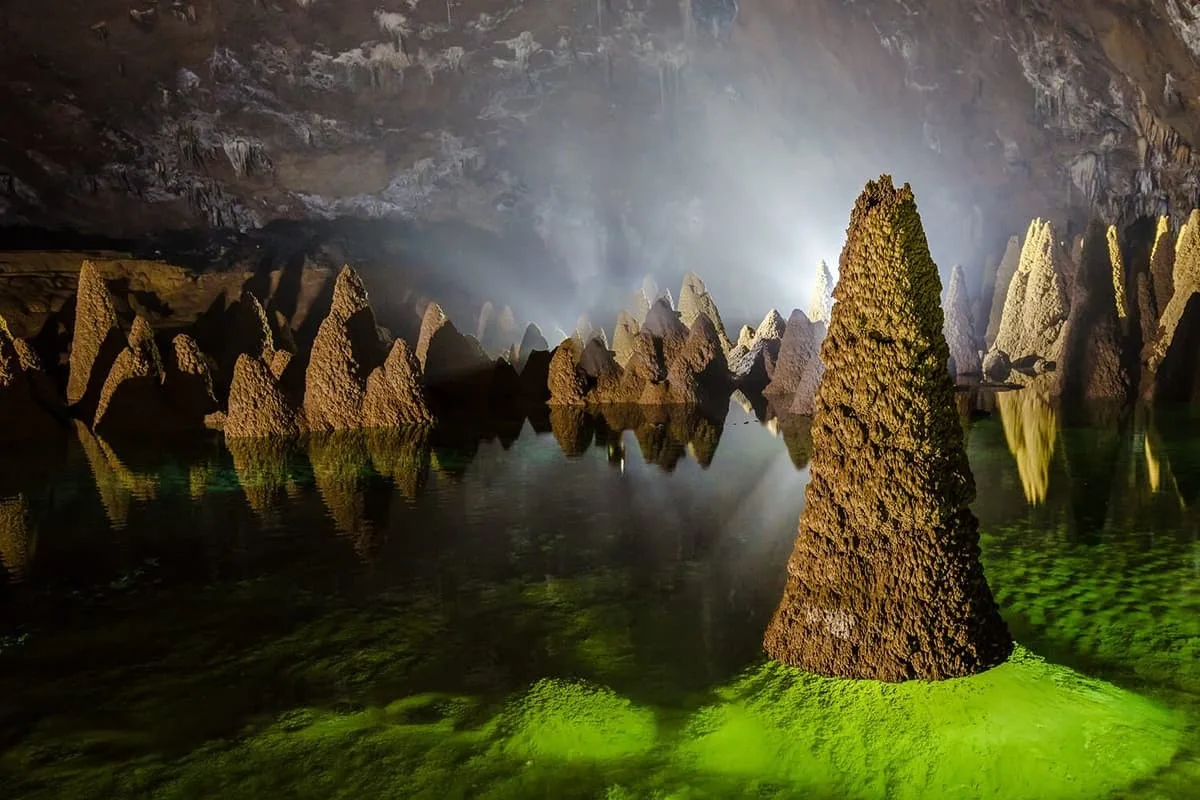
Forests of cone-shaped tower stalagmites rising out of jade-coloured pools. One of the strangest, most photographed caves on the planet.
- Price from
- $360 (9.200.000 ₫)
- Duration
- 2 days / 1 night
- Difficulty
- Challenging
- Season
- January to August
- How to visit
- Guided tour · Oxalis
around $346, 2 days. Prices checked June 2026, refreshed quarterly.
Last visited: June 2026
Is it worth it?
If you have done a giant cave already and you want something otherworldly and rare, Hang Va is the one. Smaller group sizes, weirder geology.
How to visit
Hang Va is a guided trip only, run by Oxalis. Book ahead, especially in peak season, and check the latest dates and price before you commit.
Oxalis is the only licensed operator for this cave, so this goes straight to their own booking page.
The short answer on Hang Va
Hang Va is the strangest-looking cave open to visitors in Phong Nha. Its upper chamber holds a forest of cone-shaped tower stalagmites, some close to two metres tall, growing straight up out of shallow pools of jade-green water held back by natural calcite dams. That formation barely exists anywhere else on earth at this density, which is why the BBC put it in Planet Earth III. You reach it on a 2-day, 1-night expedition run by Oxalis, the only company licensed for the cave, for around $346 (9,200,000 VND) per person (Prices checked June 2026), with a night camped in the jungle beside Hang Nuoc Nut.
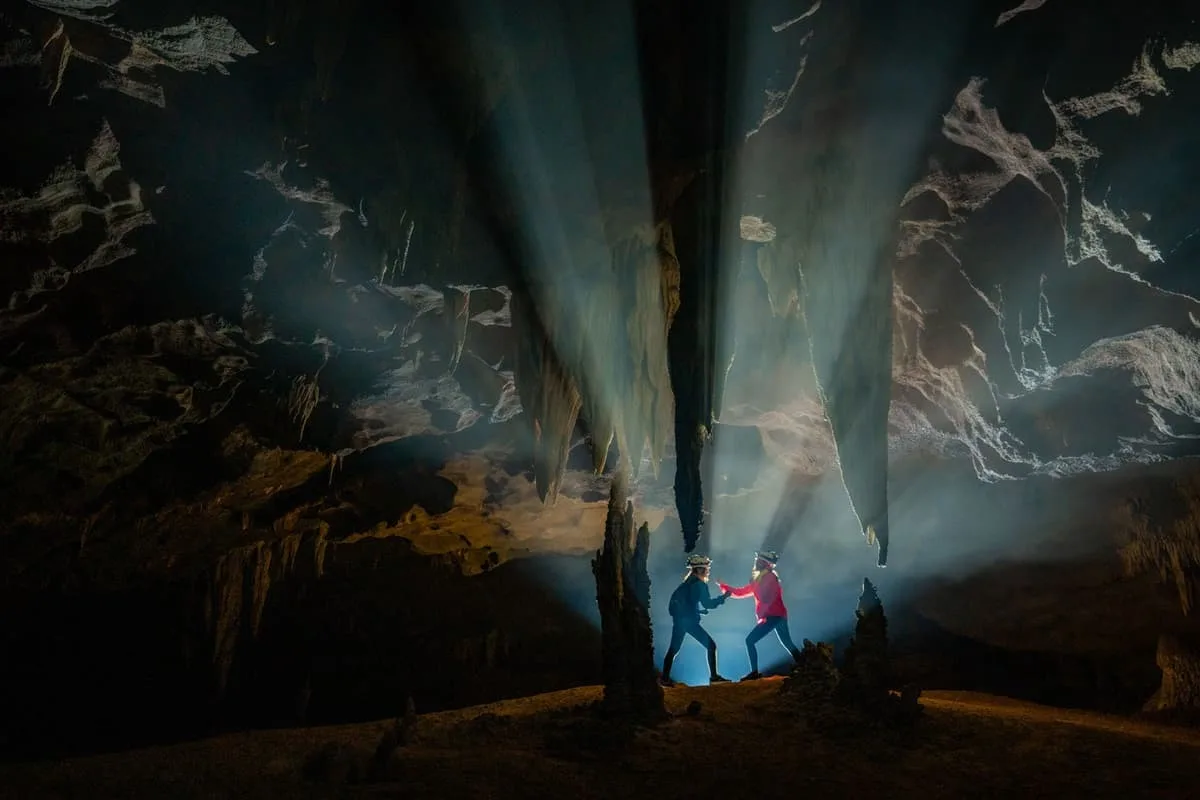
Here is the part most write-ups skip: this is not a first cave. You wade and swim through cold underground river, you descend into the cave on a rope, and you traverse a wall of flowstone clipped to a horizontal line with the river running below you. It rewards people who have already done a big cave and want something rarer and more hands-on, not someone deciding whether caving is for them.
What you actually see inside Hang Va
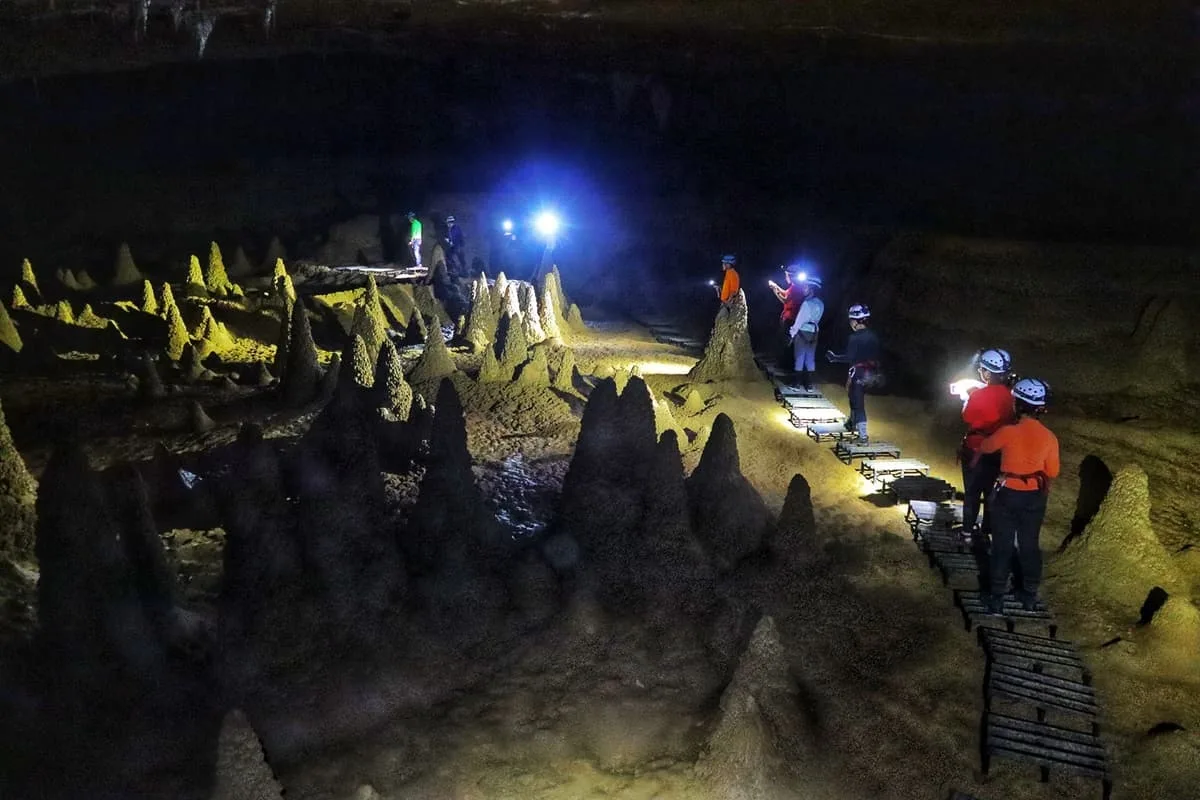
The tower cones are the whole reason to come. They sit in the high-level passage above the river, dozens of them rising out of gour pools, the shallow basins that form behind rimstone dams as mineral-rich water spills over and leaves calcite behind. The water is still and clear and reads turquoise or deep green under the guides' lights. Scientists still argue about exactly how the cones grew this way, which tells you how unusual they are.
Getting your eyes on them takes work, and that is by design. The cones are protected behind the pools, so you approach along a flowstone wall on a fixed rope, half-climbing and half-walking across it with the underground river moving beneath you. It is the most technical and the most memorable stretch of the trip. People who have caved all over Phong Nha still bring up Hang Va first when they talk about the weirdest thing they have seen underground.
The rope descent and the river
The entrance to Hang Va is not a mouth in a cliff. It is a collapse in the floor of a steep valley, so to get in you drop about 15 metres down on a rope into a low stream passage. The guides rig it, clip you onto your harness, and walk you down. You then keep the harness on the entire time you are inside the cave, because the rope work does not stop at the entrance.
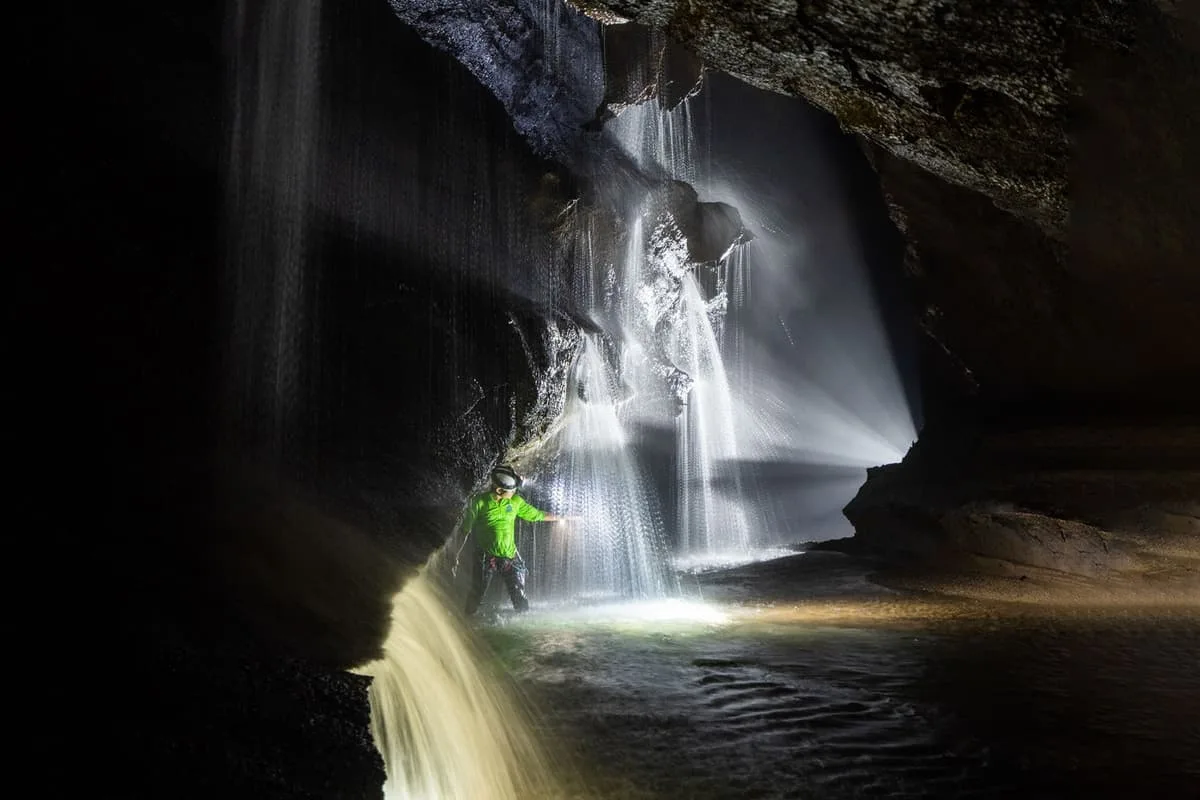
From there it is an underground river, not a dry walk. You wade through sections that come and go in depth and you swim one stretch outright, roughly ten minutes of it, in a life vest. There is mud, some scrambling over boulders, and a few low passages where you crouch or crawl. None of it is extreme, but all of it is wet, and the rope traverse over the gour pools near the cones is where the trip earns its difficulty rating.
How cold the water really is
Cold enough to matter. The river inside sits around 20 degrees, which sounds mild on paper and is a shock when you lower yourself in. One honest way reviewers put it is that your body audibly gasps on the first contact. You will not be in danger and you will not freeze, but you will be wet for long stretches of both days, and the cave air does not warm you back up the way sun would.
If you run cold, plan for it. The swim is short but the wading is constant, and you spend hours in damp gear. Oxalis runs a steam sauna at camp partly for this reason, to thaw people out at the end of day one. Bring a warm dry layer sealed in a dry bag for camp, because the difference between a miserable night and a good one is dry clothes.
The night at Hang Nuoc Nut camp
Day one is more than a warm-up. A short jungle trek of about thirty minutes brings you to Hang Nuoc Nut, a separate cave you explore on the way in, with its own mud crawls, cold swim, and a ten-metre rope climb back out at the end. You then camp in the valley nearby rather than inside a cave.
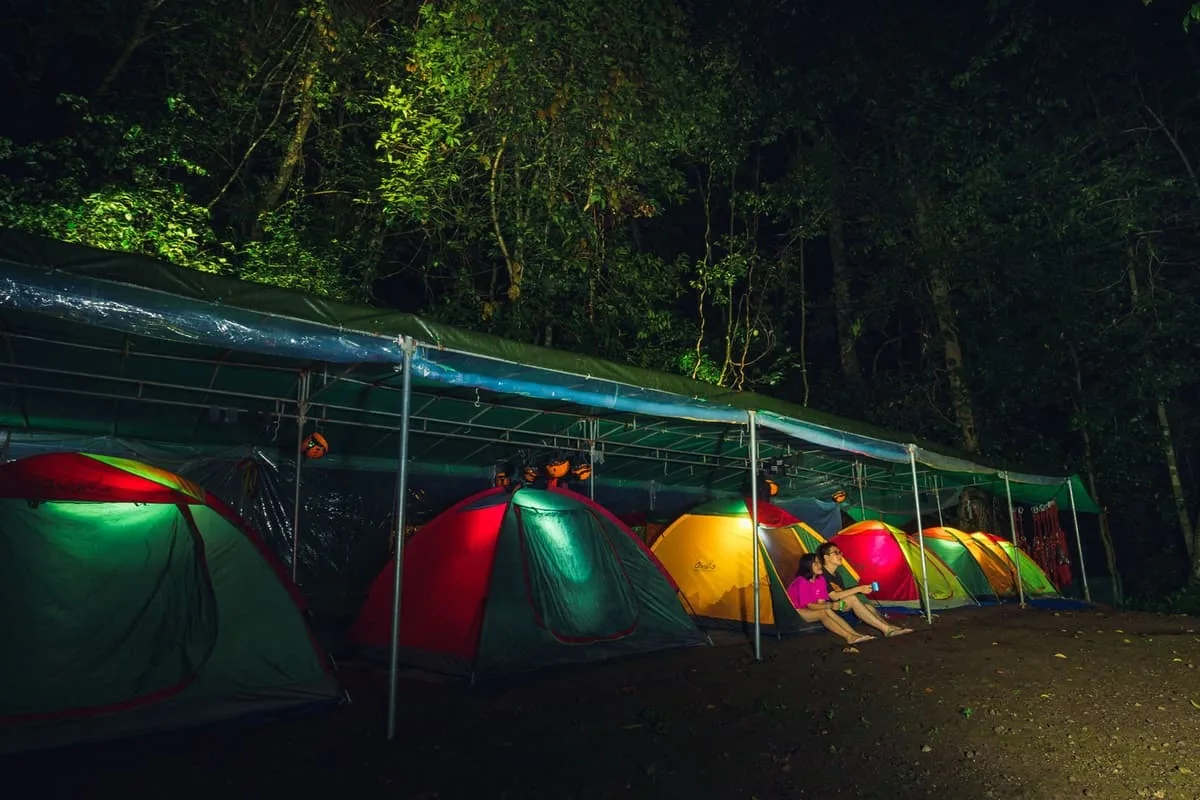
Camp is comfortable for somewhere this remote. You sleep in individual tents with warm sleeping bags, the chef cooks a proper hot dinner over a fire, and there is the steam sauna to sit in after a day of cold water. Day two is the main event: back into the underground river, the flowstone traverse, and the tower cone chamber under the guides' lighting, then the trek and river crossing out.
Who Hang Va is for, and who should skip it
Pick Hang Va if you have already done a giant cave, Son Doong or Hang En or Hang Pygmy, and you want something rarer and more technical rather than bigger. The draw here is visual strangeness and hands-on caving, not scale. If you are a confident swimmer, you are fine being cold and muddy for two days, and the rope work sounds like the fun part rather than the scary part, this is your cave.
Skip it, or save it, if Phong Nha is your first taste of caving. The cold-water swimming, the rope descent, and the traverse over the pools all assume a baseline of comfort underground that a first-timer does not have yet. The cave itself asks for visitors who are in good health and regularly active, broadly the 16 to 70 range, and able to handle a moderate level of climbing, swimming and crawling. Start with Paradise, Phong Nha or Hang En, then come back for this.
Season: when Hang Va is open
Hang Va runs January to August. The rest of the year the underground river rises with the central Vietnam rains and the cave closes, so do not plan anything here from September to December. Inside the open season the early months are drier and the water is at its calmest, which makes the swimming and the rope traverse less of a fight.
Departures are limited, often a single day a week and only for small groups, so the calendar fills in a way the popular caves do not. If your dates are fixed, check availability early rather than assuming you can slot in close to the time.
How to book Hang Va
Oxalis holds the only licence for Hang Va, so you book through the official Oxalis website and nowhere else. Anyone else advertising the cave is reselling Oxalis or running a scam, and there is no cheaper backdoor to the same trip. The price covers what you would expect on an expedition: the permit, your guide and safety team, the porters, all the caving and safety gear, the wetsuit and harness, meals, and the camp.
Groups are kept small, often around six to eight guests with a full crew of guide, safety assistants, chef, porters and a park ranger, which is part of why the trip costs what it does and part of why it stays quiet inside the cave. Book a few months ahead for the cool, dry months, and if Hang Va is full or you decide you want the famous tower cones plus a giant cave on the same trip, look at pairing it with Hang En or stepping up later to Son Doong, both Oxalis caves in the same park.
Common questions
What makes Hang Va special?
Inside the cave, hundreds of tower-cone stalagmites grow out of shallow turquoise pools, a formation almost nowhere else on earth shows in this density. The trip pairs with a night camped in Hang Nuoc Nut.
Who is Hang Va for?
People who have done a big cave before and want something rarer and more technical. You wade and swim through cold sections in the cave, with ropes for the descent into the pool chamber.
How are Hang Va's cone stalagmites different from normal cave formations?
Most stalagmites build up where drips hit the floor. Hang Va's tower cones grow straight up out of shallow gour pools, the basins behind natural calcite dams, and pack together in a dense forest of dozens, some near two metres tall. Scientists still argue about exactly how they formed at this density, which is why almost nowhere else on earth looks like it and why the BBC filmed it for Planet Earth III.
Is Hang Va just a harder Nuoc Nut, or a different cave?
Different cave, and that is the point. Both are on the same 2-day expedition (around $346, 9,200,000 VND, prices checked June 2026), but Nuoc Nut on day one is a river cave with mud crawls, a cold swim and a ten-metre rope climb out. Hang Va on day two is the rarer one: a 15-metre rope descent into the entrance, then a fixed-rope traverse across a flowstone wall above the river to reach the cone pools. Nuoc Nut warms you up, Va is the formation you came for.
Getting here
How to reach the caves
Phong Nha town (Son Trach) is the base for every cave. Here's the run from the most common starting points.
Want this cave built into a full Phong Nha plan?
Plan my trip