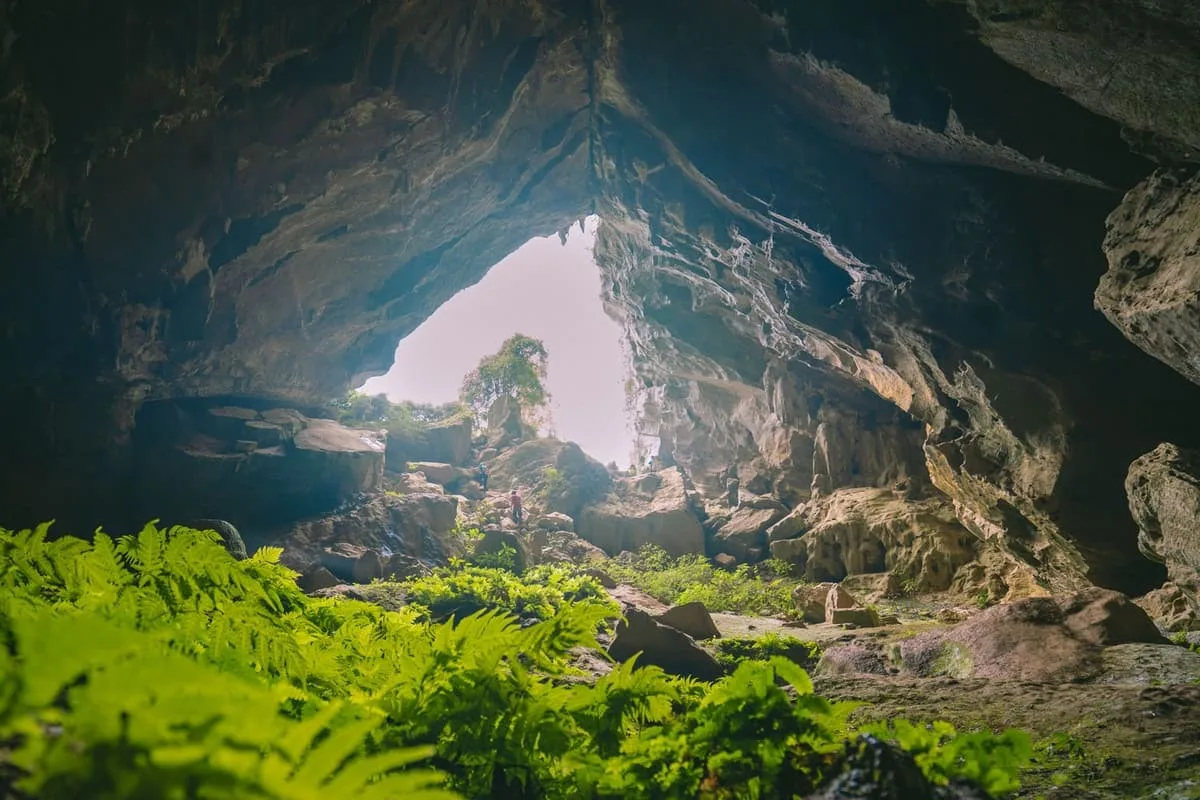
Fairy Cave
Hang Tien
Hang Tiên
Cascading calcite terraces like a frozen waterfall in stone, in the Tu Lan area. The 2-day camping trip is the sweet spot of beauty and access.
- Price from
- $225 (5.800.000 ₫)
- Duration
- 1 to 2 days
- Difficulty
- Moderate
- Season
- December to August
- How to visit
- Guided tour · Oxalis
around $217 for 2 days. Prices checked June 2026, refreshed quarterly.
Last visited: June 2026
Is it worth it?
Less famous than its neighbours and that is the point. You get the limestone-terrace scenery without the crowds, paired with a Tu Lan visit.
How to visit
Hang Tien is a guided trip only, run by Oxalis. Book ahead, especially in peak season, and check the latest dates and price before you commit.
Oxalis is the only licensed operator for this cave, so this goes straight to their own booking page.
The short version
Hang Tien is the Fairy Cave, the biggest dry cave in the Tu Lan system, about 70km west of Phong Nha near Tan Hoa village. Most people who come to this region have never heard of it, and that is the whole appeal. Inside, the floor steps down in tiers of pale calcite that look like rice paddies carved out of stone, with flowstone pillars dozens of metres tall and a ceiling that runs over 100 metres up in places. The trip to book is the 2-day, 1-night run with Oxalis at around $217 (5,800,000 VND) (Prices checked June 2026), which pairs Hang Tien with a Tu Lan cave and a night of riverside jungle camping.
If you wanted Hang En and it sold out, or you want something quieter and drier than the swim-heavy Tu Lan trips, this is the gap it fills. It is also one of the easier Oxalis caves to actually get a date for.
Why it is called the Fairy Cave
Hang Tien translates straight to Fairy Cave. The local story is that fairies came down from the sky, got so absorbed in the scenery that they lost the way home, and the place has been treated as sacred ever since. Villages around Tan Hoa used the cave for rain prayers and peace rituals long before any tour ran here.
Stand inside and the name makes sense even if you skip the myth. The terraced calcite pools climb the cave floor like a frozen staircase, the kind of formation that looks built rather than grown. Geologists call them rim pools or travertine terraces, the same process that shapes the famous travertine pools in Turkey, except here it is sealed in the dark and lit only by your headlamp. The British caving team that first surveyed the cave in 1994 came out talking about it, and the second branch, Hang Tien 2, was not fully mapped until 2016.
What you actually see inside Hang Tien
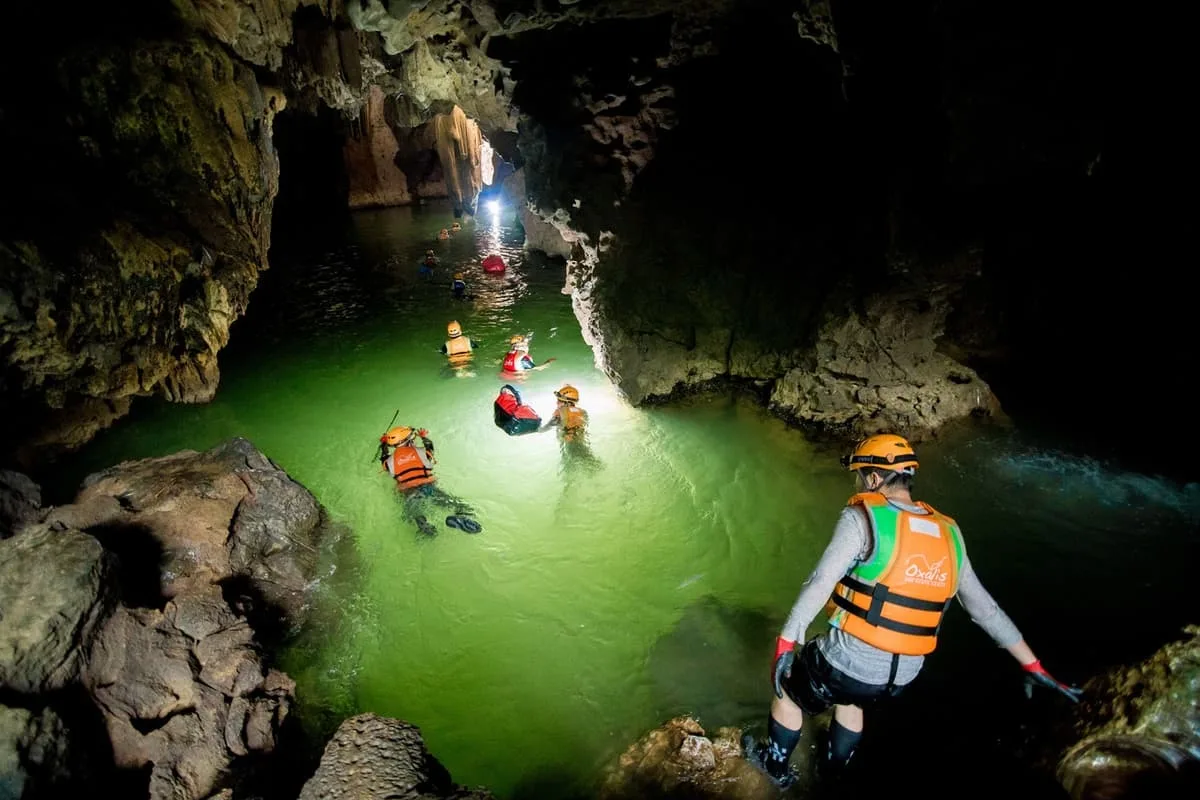
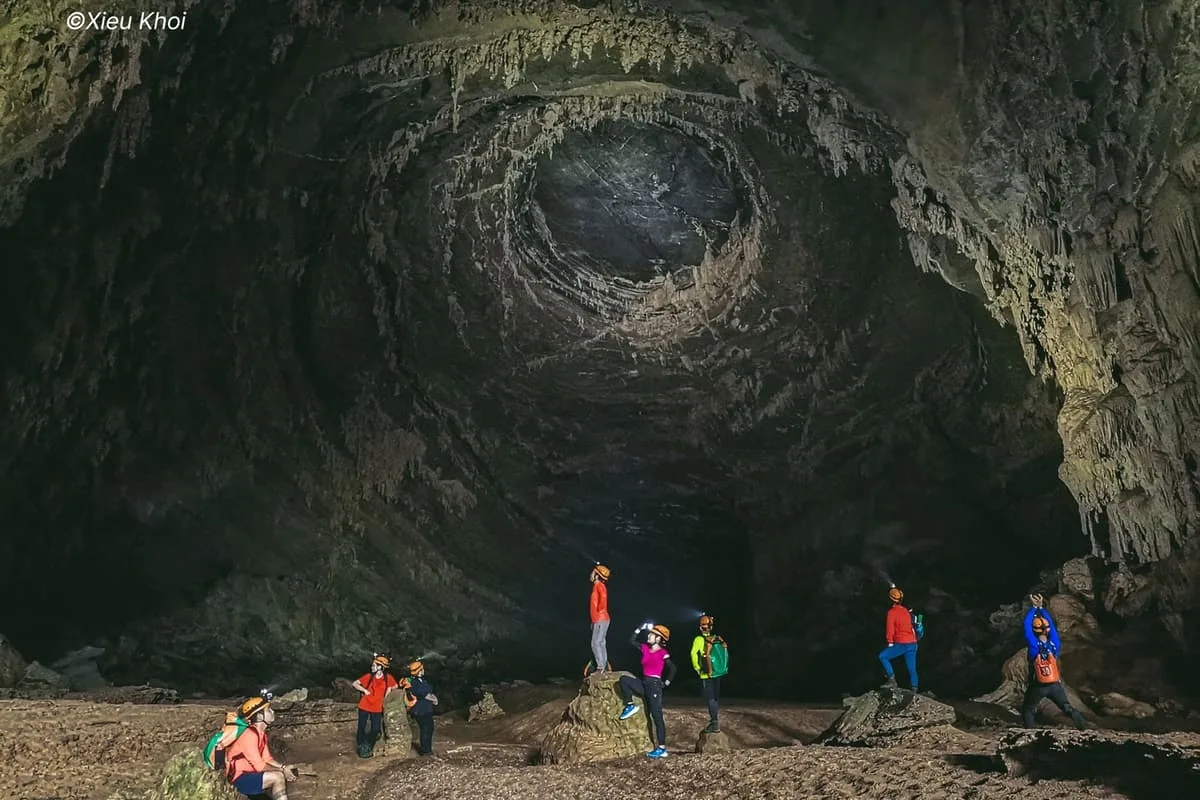
This is a dry cave, and that changes the feel completely. There is no roaring underground river, no big swim through a sump. You walk. The cave runs close to 3km across its two branches, connected by a strip of old-growth forest, and the scale is the thing that gets people. The main chamber opens into a dome over 100 metres high, and the walls carry these striped, veined patterns where the rock has been laid down in bands over a very long time.
The two showpieces are the terraces and the pillars. The calcite terraces step across the floor in shallow tiers, and because they are dry and pale they catch a torch beam cleanly, which is exactly why photographers like this cave. The flowstone columns are the other one, sheets and pillars of mineral deposit running tens of metres from floor toward the roof. Look up in the right chamber and the ceiling has a swirling, vortex pattern that guides tend to point out as the galaxy. None of it is hyped on the trip. The guide just stops, points the light, and lets you work out the size for yourself.
What the 2-day trip is like
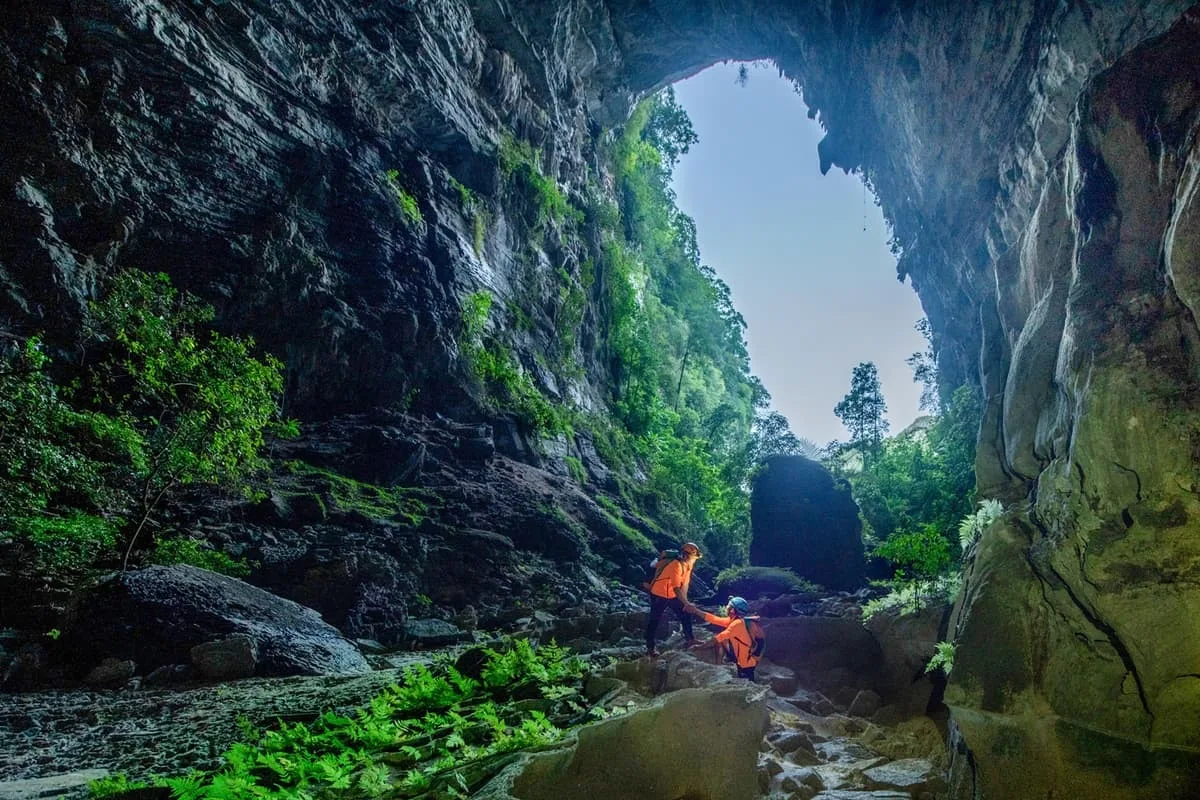
You start from Tan Hoa, the same farming valley that serves as the base for the Tu Lan caves. Day one is a jungle trek in to the campsite, with a Tu Lan cave visited along the way, then dinner and a night under canvas beside the river. The camps here are proper riverside jungle sites, tents with a mattress and a cooked local dinner, a composting toilet, and a wash in the stream. It is remote, but it is not a survival exercise.
Day two is Hang Tien itself. You explore both branches as far as the route allows, and the way out is the part nobody expects: you clip into a harness and climb a roughly 10 metre vertical ladder out of the cave and straight into the forest above. There is some swimming and there are river crossings, but compared to the pure Tu Lan trips it is mostly floating in a life jacket and wading waist-deep rather than long hard swims. The balance tips toward walking and dry-cave exploring, which is part of why it suits people who want an overnight in the jungle without a full-on expedition.

Who Hang Tien suits, and who should skip it
Book this if you are reasonably fit, you want a real night in the jungle, and you would rather have space to yourself than a famous name. Oxalis caps groups at 10, and because the cave sits off most travelers' shortlists, you often share it with just your own group and the guides. That quiet is rare now and it is the best reason to come.
Photographers should pay attention. The dry, pale terraces and the big flowstone hold detail under a headlamp far better than a wet, reflective cave does, and the scale gives you something to set people against. Bring a small tripod if you are serious, because it is dark and handheld shots will not do it justice.
Skip it if you came for the headline swim-throughs and underground rivers. The Tu Lan Encounter delivers more of that. Skip it too if a 10 metre ladder climb out of a cave sounds like a problem, though the guides rig it and talk you through every rung. And if you want the absolute biggest space you can stand in, Hang Pygmy or Hang En give you more raw volume.
The Hang En sold-out problem, and where Hang Tien fits
Hang En is the cave most people try to book first, because it is the one you sleep in on night one of the Son Doong trek and it photographs like a postcard. It also runs limited departures and fills up, especially in the cool, dry months. When it is gone, travelers usually scramble between Hang Pygmy and whatever else has space, and Hang Tien rarely makes the list because they have not heard of it.
It deserves to be on the list. You still get the overnight jungle camp, the headlamp-lit chambers, and a genuinely big cave, for a different kind of beauty: terraces and flowstone instead of En's vast river-mouth and swifts. It is not a consolation prize, it is a different cave that happens to be easier to get into. If your dates are fixed and Hang En will not budge, this is the call that saves the trip rather than the one you settle for.

When to go: the December to August season
Hang Tien runs December to August. The reason it can open earlier than the river caves is that it is dry, so it does not depend on low water inside. Avoid the back end of the year, roughly mid-September to mid-November, when central Vietnam floods and the trails and river crossings on the approach turn dangerous. Tours shut down then for good reason.
Inside the window, February to April is the most comfortable stretch: cool air, very little rain, and low water on the crossings you do have to make. From April into August the cave is at its driest and you can explore the most of it, but the jungle trek in gets hot and humid, and afternoon showers can roll through. Leeches turn up on the wet sections in the warmer months, which is normal here and not a reason to change your plans, just wear long socks and check now and then.
How to book Hang Tien
Hang Tien sits inside the Oxalis license, so you book it directly through the Oxalis website and there is no self-guided option. Anyone advertising a self-guided Hang Tien trip is not running the real thing. Booking direct also means you can ask straight questions about water levels, fitness and which Tu Lan cave is paired with your departure before you pay.
The good news is availability. Because the cave is less hunted than Son Doong, Hang En and the Tu Lan headline trips, you can usually find a date a few weeks out rather than months ahead, even in the cooler months when the famous caves are long gone. If you are weighing it against the neighbours, the honest split is this: pick Tu Lan if you want the swimming and the waterfalls, pick Hang En if you can get a spot and want the giant river-mouth chamber, and pick Hang Tien if you want the terraces, the quiet, and a cave you will have largely to yourself.
Common questions
Why is it called the Fairy Cave?
The tiered calcite pools and cascading flowstone inside look like a fairy-tale staircase carved out of stone. The Vietnamese name Hang Tien literally means Fairy Cave.
How hard is the Hang Tien trip?
Moderate trekking, with one night of camping in the jungle. Less swimming than Tu Lan, more walking and more dry cave exploration.
Hang Tien or Tu Lan, what is the real difference?
Both start from Tan Hoa, but Tu Lan is the wet trip and Hang Tien is the dry one. Tu Lan is built around long swims through underground rivers and waterfalls; Hang Tien is mostly walking through a big dry cave full of calcite terraces and flowstone, with only light wading and a float or two. Pick Tu Lan if you want to swim, Hang Tien if you want the terrace scenery and the quiet. The Oxalis 2-day Hang Tien pairs a Tu Lan cave with it for around $217 (5,800,000 VND), so you taste both. Prices checked June 2026.
Are the calcite terraces and the ladder exit a problem for the average person?
The terraces are dry and you walk beside them, not over slick wet rock, which is part of why the cave photographs well and feels less treacherous underfoot than a river cave. The one moment to know about is the way out: a roughly 10 metre vertical ladder climb on a harness, rigged and supervised by the guides. If a short clipped-in ladder sounds fine, the trip sits squarely in moderate territory. If it does not, this is the wrong cave. Prices checked June 2026, the 2-day runs about $217 (5,800,000 VND).
Getting here
How to reach the caves
Phong Nha town (Son Trach) is the base for every cave. Here's the run from the most common starting points.
Want this cave built into a full Phong Nha plan?
Plan my trip